Introduction: How long do fiberglass planters actually last outdoors-and what affects their lifespan over time?
When investing in outdoor planters for commercial projects, one key question often arises: how long do fiberglass planters actually last outdoors-and what affects their lifespan over time?
Fiberglass planters are widely used in hospitality, real estate developments, and public landscapes due to their durability and design flexibility. However, their actual lifespan depends not only on environmental exposure, but also heavily on manufacturing quality.

Typical Lifespan of Fiberglass Planters Outdoors
Under normal outdoor conditions, fiberglass planters typically last 5+ years, and in many cases significantly longer if they are not subject to human damage such as impacts or improper handling.
In well-managed commercial environments-such as hotels, shopping centers, and office buildings-high-quality fiberglass planters can maintain both structural integrity and appearance for many years beyond this baseline.
However, one critical factor is often overlooked:
The real lifespan of a fiberglass planter depends more on factory craftsmanship than on the material itself.
Why Manufacturing Quality Matters More Than You Think
Even when using the same base materials (resin and fiberglass), differences in production techniques can lead to dramatically different product lifespans.
A key example is the surface preparation process, especially putty application and sanding (fairing and polishing).
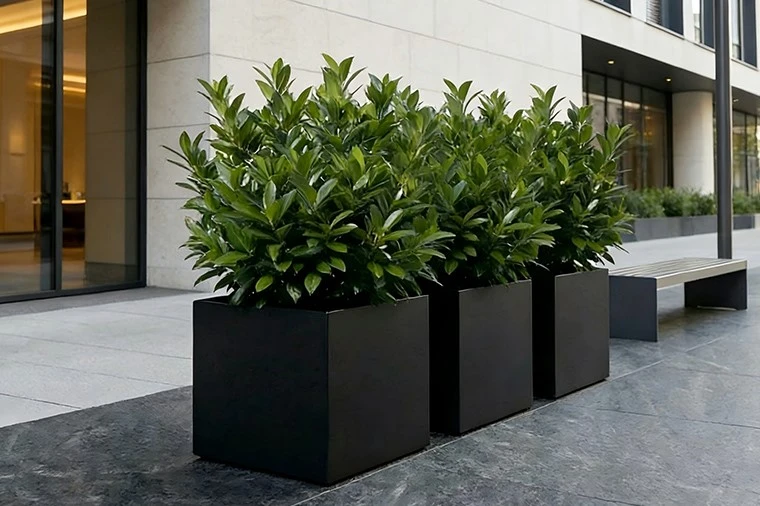
Example: Putty Application and Sanding Quality
During production, fiberglass planters go through a process of surface leveling using putty, followed by sanding to achieve a smooth finish before coating.
This step may seem purely cosmetic-but in reality, it directly affects durability:
Over-sanding (too aggressive):
Can weaken the fiberglass layer, reducing structural strength and making the planter more prone to cracking over time.
Under-sanding (insufficient finishing):
Leads to uneven surfaces, poor coating adhesion, and potential early peeling or surface defects.
Inconsistent workmanship:
Results in weak points across the planter, which may not be visible initially but can cause damage shortly after installation.
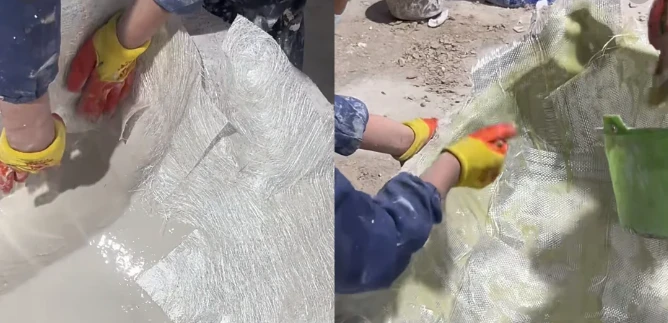
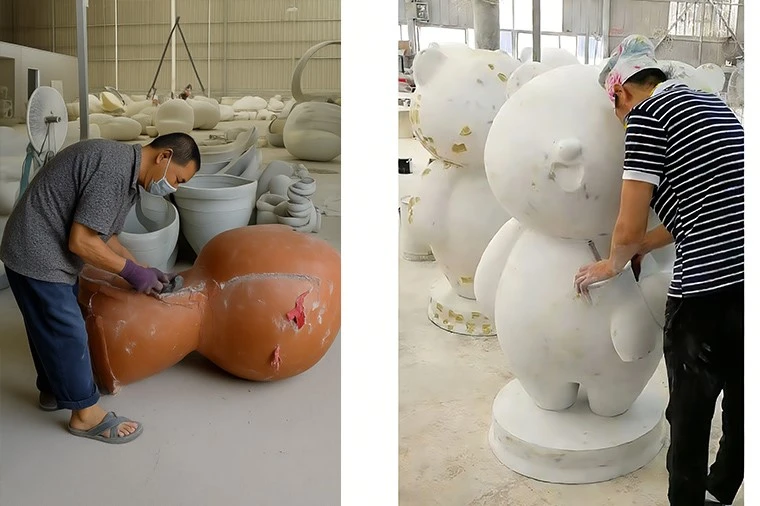
In lower-quality production environments, poor control over this process can lead to a common issue:
New planters may start to crack, deform, or deteriorate within a short period of outdoor use.
Other Key Factors That Affect Outdoor Lifespan
UV Protection and Gelcoat Quality
Without proper UV-resistant gelcoat, planters may fade, chalk, or lose their finish within a few years.
Structural Thickness and Reinforcement
Insufficient fiberglass layering can reduce impact resistance and long-term durability.

Drainage and Internal Design
Poor drainage can lead to water buildup, increasing internal pressure and causing damage over time.
Handling and Installation
Improper transportation or installation can create hidden structural stress that shortens lifespan.
Final Thoughts
While fiberglass planters are often marketed as long-lasting outdoor solutions, their real-world performance depends on more than just the material itself.
A baseline lifespan of 5+ years is achievable, but with proper manufacturing craftsmanship and careful handling, they can last much longer.
For commercial buyers, understanding these production details is key to avoiding early product failure-and ensuring long-term value in outdoor projects.