Fiberglass sculptures are often described as decorative or artistic elements, but in real outdoor and commercial projects, they serve far more concrete and measurable purposes. From large shopping malls and cultural tourism destinations to public plazas and mixed-use developments, fiberglass sculptures are frequently planned early in the design phase-not added as afterthoughts.
This is not accidental. Project teams choose fiberglass sculptures because they solve practical problems related to spatial recognition, branding, construction feasibility, safety, maintenance, and long-term operational efficiency. This guide explains, in practical terms, what fiberglass sculptures actually do, how they function in real projects, and why they are repeatedly specified by architects, landscape designers, and commercial developers.
They Act as Primary Spatial Landmarks in Large Outdoor Environments
Large outdoor and semi-outdoor spaces present a fundamental challenge: people struggle to orient themselves. Open plazas, commercial forecourts, waterfront promenades, and large pedestrian zones often lack clear reference points, especially for first-time visitors.
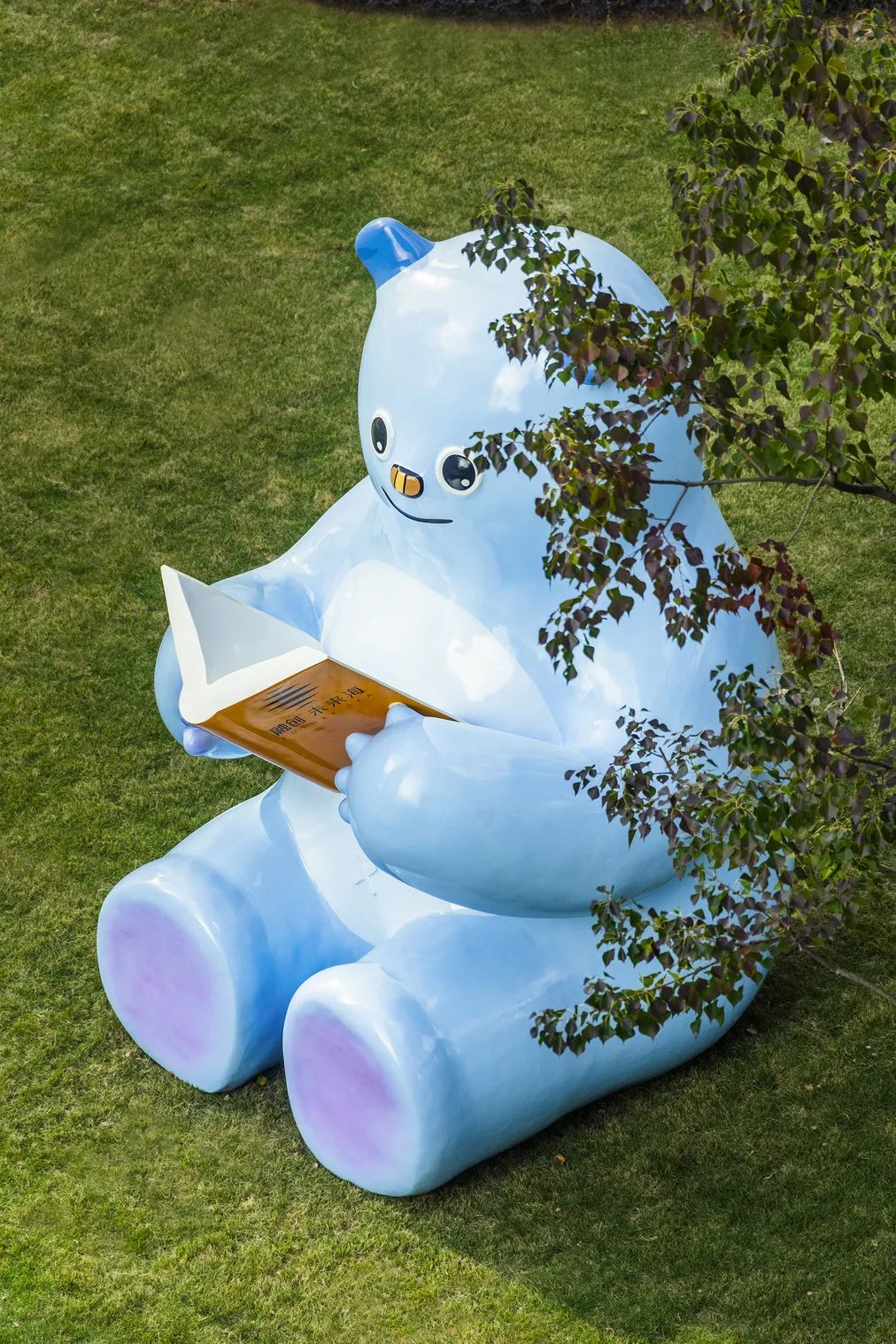
Fiberglass sculptures address this problem by functioning as high-visibility spatial anchors. Their scale, form, and color contrast allow them to be recognized from long distances, often 30–60 meters away, depending on height and placement. Unlike signage or architectural details, a three-dimensional sculpture creates an immediate visual reference that people instinctively understand.
In practice, developers often position large fiberglass animal or figurative sculptures at:
- Main entrances of shopping centers
- Central plazas or crossroads of pedestrian circulation
- Transition zones between indoor and outdoor spaces
Because fiberglass allows large volumes without excessive structural weight, sculptures in the 3–8 meter range can be safely installed even above underground structures or in podium areas where stone or solid concrete would require costly reinforcement. The result is a clear, memorable ''meeting point'' or directional reference that reduces confusion and improves visitor flow without adding complex wayfinding systems.
They Translate Brand Identity into a Physical, Shareable Experience
In commercial environments, branding is no longer limited to logos, signage, or digital screens. Physical environments themselves are expected to communicate brand identity. Fiberglass sculptures excel here because they can transform abstract brand concepts into tangible, three-dimensional forms.
Unlike materials that impose geometric or fabrication limits, fiberglass supports:
- Highly expressive shapes
- Precise color matching (Pantone or RAL systems)
- Consistent replication across multiple locations
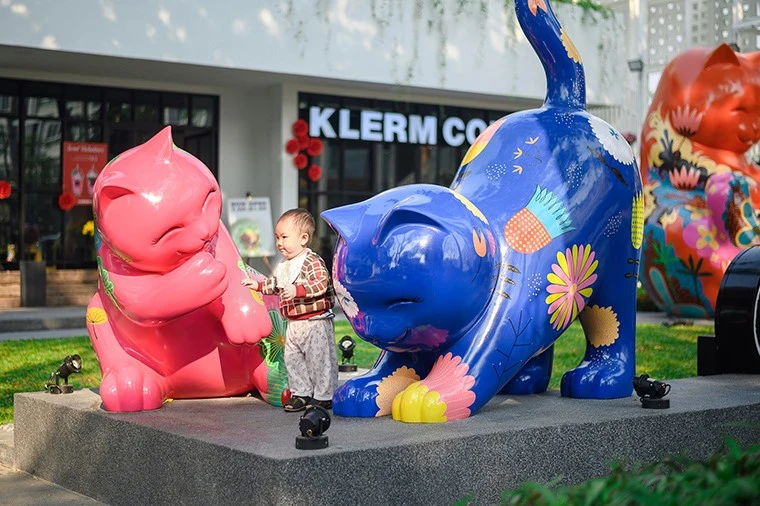
For this reason, many retail chains, family-oriented malls, and themed commercial streets use fiberglass sculptures to represent mascots, animals, or symbolic forms tied directly to brand narratives. These sculptures are not passive objects; they actively encourage photography, social sharing, and user-generated content.
From a project perspective, fiberglass makes this feasible because the same mold can be reused with controlled variations in size or finish. This allows a brand to maintain visual consistency across different cities while adapting to local spatial constraints. Over time, the sculpture becomes part of the brand's visual language, not just a decorative feature.
They Integrate Functional Use into Sculptural Forms
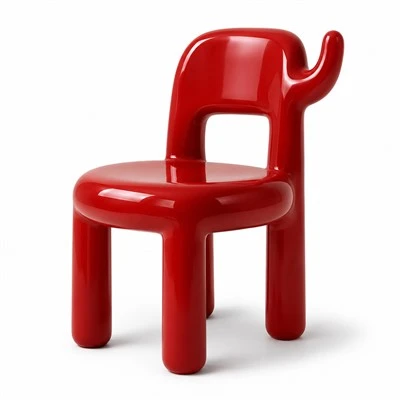
In public and semi-public spaces, every object is eventually interacted with-sat on, leaned against, climbed on, or touched repeatedly. Fiberglass sculptures are often designed with this reality in mind.
Rather than functioning purely as art objects, many fiberglass sculptures are engineered to support secondary uses:
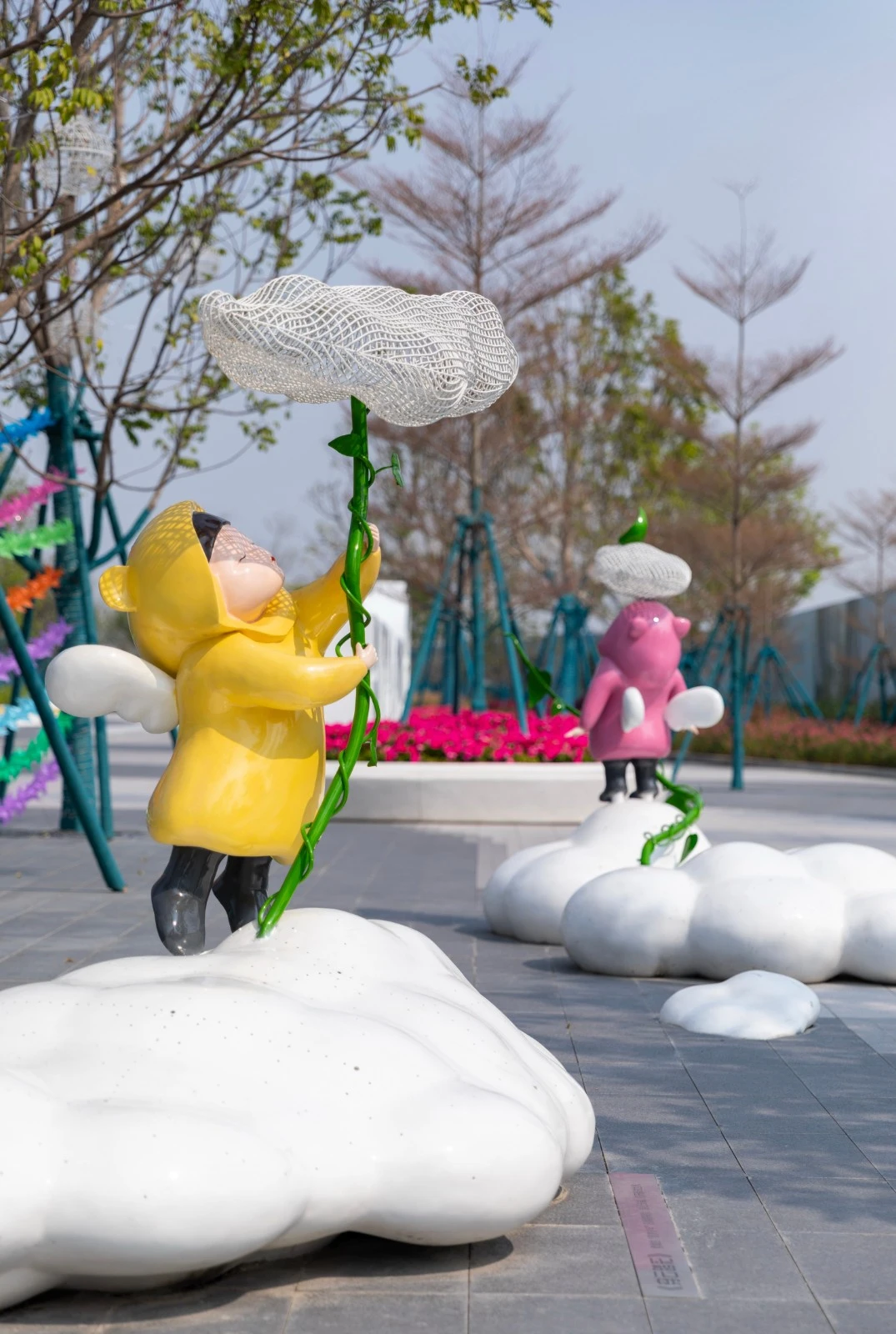
- Rounded animal forms that double as informal seating
- Large sculptural bases that act as resting edges
- Interactive shapes that invite children to climb or explore
This is possible because fiberglass structures typically include internal steel frameworks that allow designers to calculate load-bearing capacity precisely. Edges can be softened, surfaces textured for grip, and finishes selected for abrasion resistance. Compared to stone or metal sculptures, which are often restricted for safety reasons, fiberglass sculptures can be intentionally designed to accommodate human interaction without compromising durability.
As a result, a single sculptural element can replace multiple pieces of site furniture, simplifying layouts and improving spatial efficiency.
They Reduce Long-Term Maintenance and Operational Risk
One of the most critical considerations for developers and property managers is long-term maintenance. Outdoor elements inevitably age, but the key issue is how they age and whether that aging can be controlled.
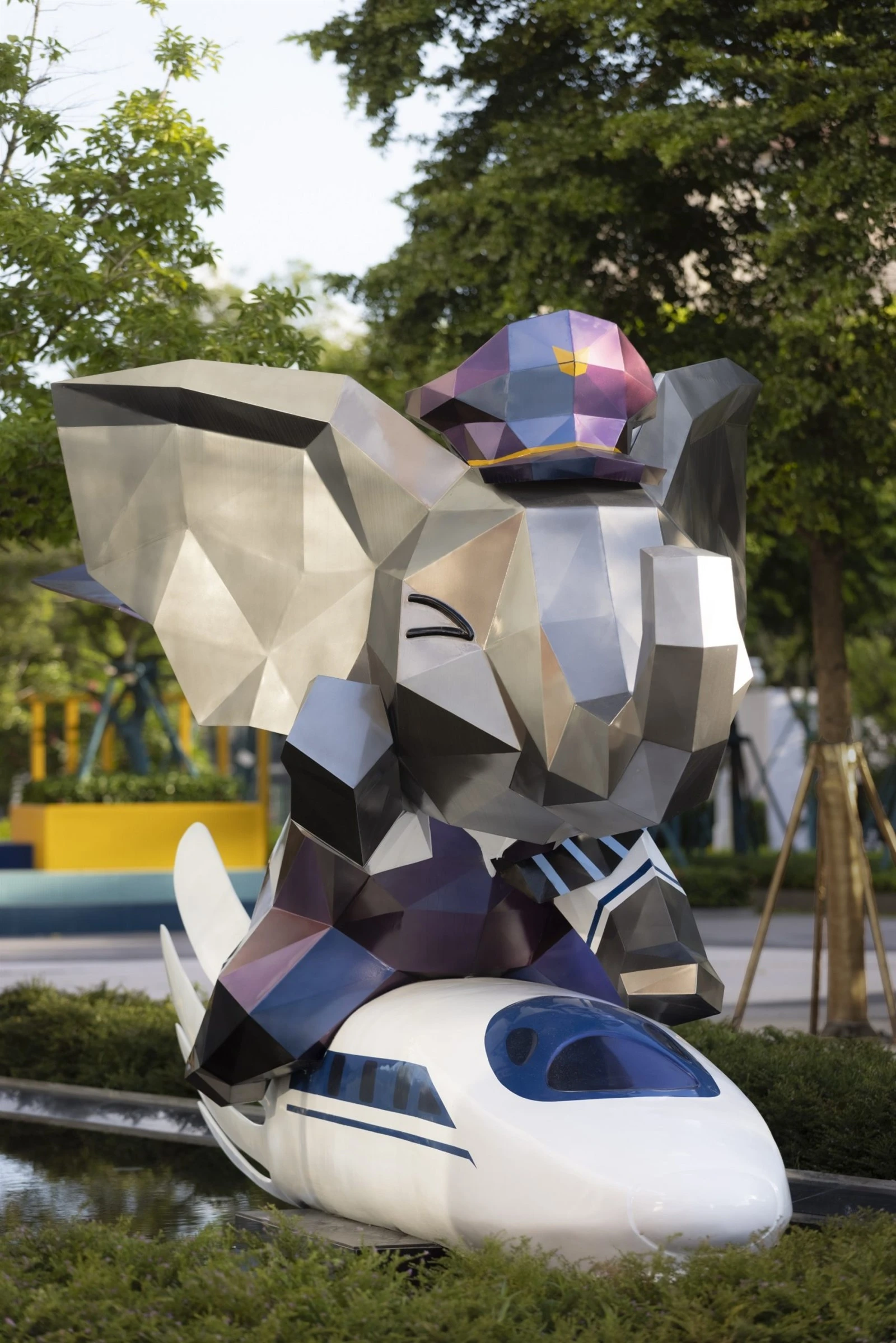
Fiberglass sculptures are typically finished with gel coat and automotive-grade paint systems designed for UV resistance and weather exposure. Over time, surface fading or minor scratches may occur, but these changes remain largely superficial. Importantly, they can be repaired locally without dismantling or replacing the entire structure.
In contrast, materials such as metal or stone often experience structural corrosion or irreversible surface erosion. Once these issues appear, repair is costly, disruptive, and sometimes impossible without full replacement.
For commercial operators, fiberglass offers a predictable lifecycle:
- Routine cleaning maintains appearance
- Periodic surface refinishing restores color and gloss
- Structural integrity remains stable for many years
This predictability allows maintenance budgets to be planned accurately, reducing operational uncertainty.
They Improve Design Feasibility and Construction Efficiency
Many sculptural concepts fail not because they lack creativity, but because they are impractical to manufacture, transport, or install. Fiberglass significantly reduces these risks.
Because fiberglass sculptures can be produced in sections, large forms are broken down into manageable modules during fabrication. These modules are transported efficiently and assembled on site, often within days. This modular approach minimizes crane time, reduces on-site labor, and allows installation to align with tight project schedules.
For developers working toward fixed opening dates-such as mall launches or tourism seasons-this reliability is crucial. Designers also benefit, as complex curves and expressive forms can be realized without pushing costs or timelines beyond acceptable limits.
Their Role Varies by Project Type, but the Value Remains Consistent
While fiberglass sculptures are used across many sectors, their primary function shifts depending on context:
|
Project Type |
Primary Function of Fiberglass Sculpture |
|
Commercial Malls |
Brand visibility and visitor engagement |
|
Cultural & Tourism Projects |
Storytelling and immersive theming |
|
Public Urban Spaces |
Landmark creation and spatial orientation |
|
Residential & Mixed-Use Developments |
Visual identity and place differentiation |
Understanding this distinction is critical for buyers. Successful projects do not choose fiberglass sculptures because they are trendy, but because they align the material's strengths with specific project goals.
Practical Guidance for Buyers and Designers
When considering fiberglass sculptures for outdoor or commercial spaces, decision-makers should evaluate:
- Whether the sculpture is intended as a landmark, brand symbol, functional element, or combination
- How scale and placement affect visibility and circulation
- The expected level of physical interaction and required structural reinforcement
- Long-term maintenance strategies and access for repairs
Projects that address these questions early tend to achieve better visual impact, smoother installation, and lower lifetime costs.
Conclusion
Fiberglass sculptures are not merely decorative accents. In modern outdoor and commercial environments, they function as spatial tools, branding assets, functional infrastructure, and risk-management solutions. Their continued popularity across global projects is driven by practical performance, not aesthetic preference alone.
For designers, developers, and buyers seeking elements that combine creative freedom with real-world reliability, fiberglass sculptures remain one of the most versatile and effective solutions available.