Foreword
In recent years, fiberglass planters have become a top choice for landscape architects, commercial developers, and retail buyers due to their durability, lightweight structure, and design flexibility. For wholesale buyers, however, purchasing fiberglass planters is not just about choosing a design-it involves understanding manufacturing standards, customization options, logistics, and long-term value.
This guide explains everything you need to know before placing wholesale orders, helping you make informed purchasing decisions and avoid costly mistakes.

Key Factors to Consider Before Placing Wholesale Orders
Material Quality and Resin System
Not all fiberglass planters are created equal. The quality largely depends on the resin system used and the layering process of fiberglass sheets.
High-quality planters typically use unsaturated polyester resin combined with alkali-free fiberglass mats. This ensures better structural strength, UV resistance, and long-term durability in outdoor environments.
Poor-quality products may crack, fade, or deform over time, especially under extreme weather conditions.
Thickness and Structural Reinforcement
Thickness plays a critical role in durability. For commercial-grade fiberglass planters, standard thickness usually ranges from 3mm to 8mm depending on size and application.
Large-scale outdoor installations often require internal reinforcement structures to prevent deformation under soil and plant weight.
Always confirm whether the supplier provides internal rib reinforcement or steel framing options for oversized planters.
Surface Finishing Options
Surface finishing is what defines the visual impact of fiberglass planters. Common finishes include:
- Matte finish for modern architectural spaces
- High gloss for luxury commercial interiors
- Stone texture for natural landscape integration
- Metallic coating for artistic installations
Advanced factories also offer custom color matching based on RAL or Pantone systems, which is essential for brand consistency in commercial projects.
UV Resistance and Weather Performance
For outdoor applications, UV resistance is non-negotiable. High-quality fiberglass planters are coated with automotive-grade UV-resistant paint systems.
This prevents fading, yellowing, and surface degradation even under strong sunlight exposure. In regions with extreme climates, temperature resistance can range from freezing conditions to high heat environments.
Customization Options in Wholesale Orders
Size and Shape Flexibility
One of the biggest advantages of fiberglass planters is full customization. Buyers can request standard sizes or fully bespoke designs based on architectural drawings.
Popular shapes include:
- Cylindrical and round planters
- Square and rectangular planter boxes
- Tapered and conical designs
- Organic and parametric shapes
Custom molds allow brands and designers to create unique visual identities for their projects.

Color Matching and Branding
For commercial projects, color consistency is crucial. Manufacturers often support full RAL color matching or custom samples to ensure alignment with project design requirements.
Some buyers also request logo integration or branded planter designs for retail and hospitality environments.
Drainage System and Functional Design
Proper drainage is essential for plant health. Wholesale buyers should confirm whether planters include:
- Pre-drilled drainage holes
- Removable inner liners
- Elevated base designs for water flow
- Irrigation system compatibility
These details significantly impact long-term usability, especially in large-scale landscaping projects.
MOQ, Pricing, and Production Lead Time
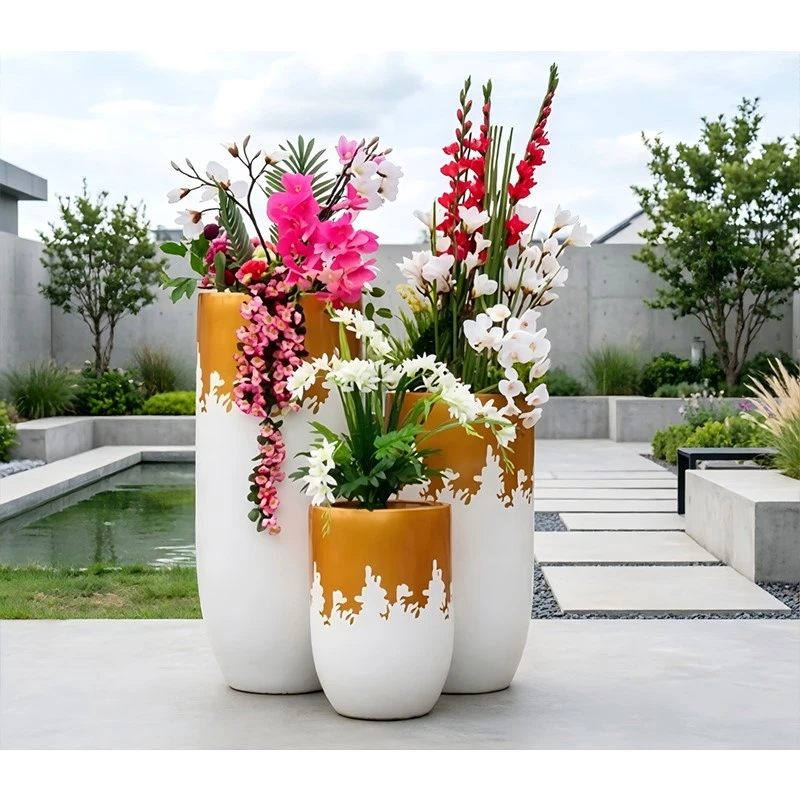
Wholesale fiberglass planter orders typically involve MOQ (Minimum Order Quantity), which varies depending on customization level.
Standard products may require lower MOQ, while fully custom molds often require higher quantities to justify production setup costs.
Production lead time generally depends on design complexity:
- Standard models: 15–25 days
- Custom molded designs: 25–40 days
- Large commercial project orders: 30–50 days
Shipping time varies based on destination and logistics method (sea freight is most common for bulk orders).
Common Mistakes to Avoid When Buying Wholesale Fiberglass Planters
Many first-time buyers make avoidable mistakes that lead to delays or quality issues.
Choosing Based Only on Price
Low-cost suppliers often compromise on resin quality, thickness, or finishing, resulting in shorter product lifespan.
Ignoring Sample Verification
Always request samples before mass production to confirm color, texture, and structural quality.
Overlooking Installation Requirements
Large planters may require special handling or site preparation, especially for rooftop or indoor installations.
How to Choose the Right Manufacturer
A reliable fiberglass planter manufacturer should offer:
- OEM/ODM customization capabilities
- Professional mold development support
- Strict quality control processes
- Export experience for international projects
- Consistent communication during production
A strong manufacturer partnership ensures not only product quality but also project success.

Final Thoughts
Wholesale fiberglass planters are more than just decorative containers-they are long-term investments in commercial landscape design and architectural branding.
Understanding material quality, customization options, and production processes will help you make better purchasing decisions and avoid unnecessary risks.
If you are planning a wholesale order, working with an experienced manufacturer ensures your project meets both aesthetic and functional expectations.