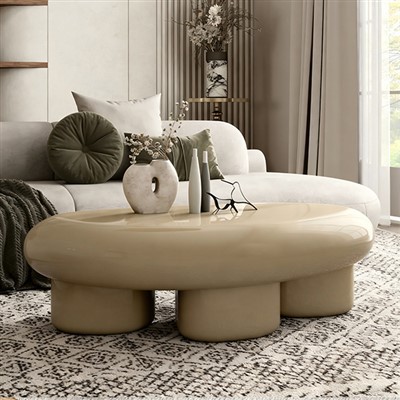
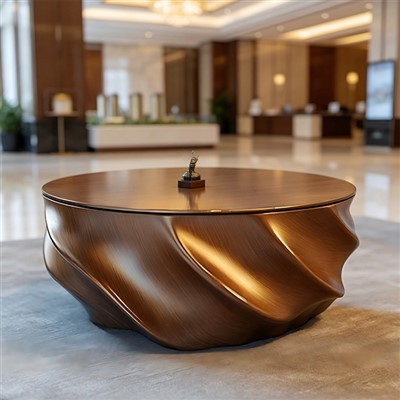
Introduction: Can complex sculptures be produced faster without sacrificing artistic detail?
In large-scale architectural and commercial projects, sculpture is no longer just decoration-it has become a key element in shaping spatial identity. However, traditional sculpture production often involves long development cycles, high costs, and limitations in form complexity.
With the integration of 3D printing and fiberglass (FRP), these constraints are rapidly disappearing. Today, designers and developers can create highly intricate fiberglass sculptures with greater speed, precision, and creative freedom. This combination is redefining how sculptural elements are designed, manufactured, and delivered in modern projects.
Why Fiberglass is Ideal for Large-Scale Sculptures
Fiberglass has long been a preferred material in architectural and outdoor applications due to its unique balance of strength and flexibility. Unlike stone or metal, it offers a significantly lighter structure while maintaining excellent durability, making it especially suitable for large installations.

When paired with advanced finishing techniques, fiberglass can convincingly replicate the look of materials such as metal, stone, or carved wood, while avoiding their inherent limitations. This makes it an ideal solution for projects that demand both visual impact and long-term performance.
The Role of 3D Printing in Sculpture Production
3D printing introduces a digital-first workflow that fundamentally changes how sculptures are developed. Instead of relying solely on manual sculpting or traditional mold-making, designers can now build complex forms directly in a digital environment and translate them into physical objects with high fidelity.
This process allows for the creation of intricate surface textures, parametric patterns, and organic forms that would be extremely difficult to achieve through traditional methods. Whether the design involves flowing curves, layered geometries, or detailed carvings, 3D printing ensures that every element is accurately captured.

Moreover, design iterations can be completed quickly, enabling architects and artists to refine concepts without restarting the entire production process. This flexibility is particularly valuable in commercial projects where timelines and revisions are critical factors.
From Digital Model to Finished Sculpture
The production of a 3D-printed fiberglass sculpture typically begins with a detailed digital model. Designers use advanced modeling tools to define the structure, proportions, and surface characteristics of the sculpture, often integrating architectural or thematic elements specific to the project.
Once the design is finalized, 3D printing is used to produce either a scaled prototype or a full-size mold. This step ensures precision and consistency, especially for complex or repetitive forms. In some cases, large sculptures are divided into sections for printing and later assembled seamlessly.
Fiberglass fabrication follows, with layers of glass fiber and resin applied to create a strong yet lightweight shell. After curing, the sculpture undergoes surface treatment and finishing. Techniques such as hand painting, texturing, and coating are used to achieve the desired visual effect, whether it is a metallic finish, stone-like texture, or custom artistic appearance.
Applications in Commercial and Public Spaces
The combination of 3D printing and fiberglass has made it possible to integrate sculptures into a wide range of commercial environments. In hospitality projects, large sculptural installations often serve as focal points in lobbies or outdoor landscapes, helping to define the character of the space.
In retail environments, custom sculptures are used to enhance brand identity and create memorable visual experiences. Public spaces, including parks and urban developments, increasingly incorporate fiberglass sculptures as landmarks or interactive elements, contributing to both aesthetics and functionality.
Theme parks and cultural destinations also benefit from this technology, as it allows for the efficient production of highly detailed, immersive structures that align with storytelling and thematic design. In each of these scenarios, the ability to customize forms without significantly increasing cost or lead time is a major advantage.
Advantages Over Traditional Sculpture Methods
Compared to conventional sculpture production, the integration of 3D printing and fiberglass offers a more efficient and adaptable approach. The digital workflow reduces the need for manual sculpting and complex tooling, which not only shortens development time but also minimizes the risk of errors.
The lightweight nature of fiberglass simplifies transportation and installation, particularly for large-scale projects. At the same time, its durability ensures that sculptures can withstand environmental exposure without frequent maintenance.
Another key advantage lies in customization. Designers are no longer constrained by the limitations of traditional fabrication techniques, allowing for greater experimentation and innovation. This makes it possible to deliver unique, project-specific sculptures that stand out in competitive commercial environments.
The Future of Sculptural Design

As 3D printing technology continues to evolve, its integration with fiberglass is expected to become even more seamless. Advances in printing scale, resolution, and material compatibility will further expand the possibilities for sculptural design.
This evolution is not only changing how sculptures are made but also how they are conceived. Designers can now think beyond traditional constraints, exploring forms and concepts that were previously impractical or impossible to produce. The result is a new generation of sculptural works that combine artistic expression with industrial efficiency.
For manufacturers and project developers, this represents an opportunity to deliver higher-value solutions while maintaining control over cost and timelines. For architects and designers, it opens the door to a more experimental and innovative approach to spatial design.
Conclusion
The integration of 3D printing and fiberglass is transforming sculpture from a time-intensive craft into a highly adaptable, scalable process. By combining digital precision with material performance, it enables the creation of complex, durable, and visually striking sculptures for modern commercial and public spaces.
As demand for customized, high-impact design continues to grow, 3D-printed fiberglass sculptures are set to become an essential element in architectural and experiential projects. What was once limited by manual processes is now driven by digital innovation-unlocking new possibilities for creativity at every scale.
Start Creating More Engaging Spaces
It is not just furniture-they are a way to bring together form, function, and environment in a single element.
If your next project aims to combine visual impact, user comfort, and practical efficiency, this approach offers a compelling solution.
We work with architects, developers, and commercial buyers to deliver custom solutions tailored to project needs.
👉 Contact us to explore how this bench series can be integrated into your next development.