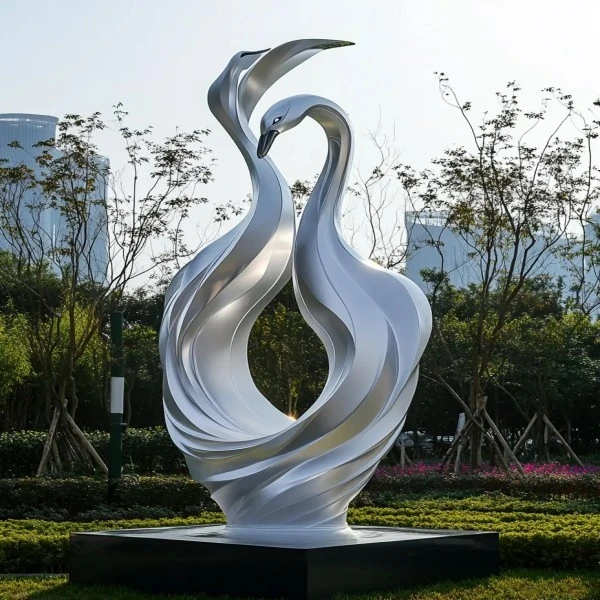
Stainless steel sculptures are among the most enduring, visually striking public artworks today. Unlike simple metal garden ornaments, professionally fabricated stainless steel art pieces require meticulous engineering, advanced material selection, and precise execution from design through installation. Getting any step wrong can result in premature corrosion, surface distortion, or structural failure - problems often hidden until years after installation.
This comprehensive guide explains what happens at each stage of fabrication, how it affects the final artwork, and why those differences matter - particularly for landscape designers, project procurement professionals, and discerning art buyers. You'll learn not only what is done, but how and why each decision influences cost, durability, appearance, and long‑term maintenance.
Design Phase: Translating Artistic Vision into Fabricatable Form
Understanding Design Intent vs. Structural Reality
In concept design, artists create forms that express aesthetic ideas. However, without engineering input, beautiful shapes can be structurally impossible or prohibitively expensive to fabricate.
What Happens Here: Designers collaborate with engineers to convert sketches into 3D models that account for:
- Structural loads: tall, slender forms experience significant wind force, requiring internal support frames.
- Material limitations: stainless steel sheets can only be bent so tightly before cracking or distorting; these limits must be understood and incorporated into the design.
- Human interaction: public art pieces frequently touched by people require smooth transitions and rounded edges for safety.
How It Impacts the Sculpture:
A form with too many deep curves or sharp concave regions may appear elegant in a rendering but can increase fabrication difficulty because:
- Each individual panel must be custom‑cut.
- More panels and joints mean more welds - and more polishing afterward.
- Panels must be oriented to avoid stress concentration zones that cause warping.
Understanding this phase helps clients set realistic budgets. A design with complex curvature may visually shine but will require significantly more engineering hours, specialized tooling, and surface finishing time, all of which drive cost.

Material Selection: Why Stainless Steel Grade Matters
304 vs. 316 Stainless Steel - What's the Difference and Why It Matters
Selecting the right stainless steel grade is not just about initial appearance - it determines how the sculpture performs in its environment.
Both 304 and 316 stainless steel are austenitic alloys used widely in sculpture. However, they differ in composition and long‑term corrosion resistance:
- 304 Stainless Steel contains about 18% chromium and 8–10.5% nickel.
- 316 Stainless Steel adds 2–3% molybdenum, enhancing chloride resistance.
How This Influences Performance:
|
Property |
304 Stainless Steel |
316 Stainless Steel |
|
Corrosion resistance |
Excellent in typical atmospheres |
Superior, especially against chlorides and salt air |
|
Suitability for marine/coastal areas |
Limited |
Recommended |
|
Cost |
Baseline |
20–30% higher due to alloying elements |
|
Weldability |
Very good |
Good, needs attention with post weld cleaning |

- A sculpture installed near the sea or in a chloride‑rich urban environment will begin to show pitting corrosion over time if made from 304.
- Inland, 304 can be suitable if the finish is pristine and maintenance is planned.
- Choosing 316 upfront may cost more initially, but reduces long‑term corrosion risk and maintenance costs.
Engineering and Modeling: Building the Blueprint for Fabrication
From Artistic Model to Fabrication‑Ready CAD
After the initial concept, the artist's model must be converted into an engineering model that can be fabricated:
- 3D CAD modeling defines exact panel shapes, thickness, and joint locations.
- Structural engineering analysis predicts how the sculpture will resist gravity, wind, and thermal expansion.
- The CAD model determines cutting paths for each metal sheet, influencing material usage and labor.
- Structural analysis ensures the internal support frame can handle loads without deflecting over time.

Why It Matters:
Without engineering modeling:
- Panels may not fit precisely during assembly.
- Undersized internal supports can lead to structural creep or deformation.
- Welded joints may concentrate stress and fail prematurely.
Cutting and Forming: Translating Digital Plans to Physical Parts
Precision Cutting and Shaping Techniques
Once engineering is complete:
- Laser, plasma, or waterjet cutting is used to produce accurate panel shapes from stainless sheets. Accuracy to sub‑millimeter tolerance ensures tight panel fits.
- Complex curves may be formed by hot bending, press forming, rolling, or hammering.
Why This Stage Matters:
- Accurate cutting limits the amount of on‑site adjustment required.
- Forming methods must suit the steel grade and thickness; incorrect forming can generate internal stresses, leading to later warping.
Welding and Assembly: Building a Single Continuous Structure
How Welding Techniques Influence Strength and Finish
Professional stainless steel sculpture fabrication typically uses TIG (Tungsten Inert Gas) welding for control and clean joints - especially important for mirror finishes.
- Welds must be continuous and free of defects to maintain strength.
- Heat control is critical: excessive heat can distort nearby panels.
How This Affects Sculpture Quality:
- Poor welding leads to weak joints or surface blemishes.
- Improper heat control can cause sheet warping, making perfect surface finishes difficult.

Good welding ensures the sculpture remains a single continuous structure able to withstand stress, weather, and time.
Grinding and Polishing: Creating the Final Surface Aesthetic
Why Surface Finish Is More Than "Shiny"
The finish stage shapes the sculpture's visual impact and performance.
Stainless steel is polished in multiple stages:
- Coarse grinding removes major weld marks and high spots.
- Medium polishing smooths surfaces further.
- Fine polishing creates a mirror or brushed finish.
How This Impacts Perception and Maintenance:
- A mirror finish amplifies reflections and hides minor imperfections - but accentuates even tiny distortions.
- A brushed finish can mask fingerprints and micro‑blemishes, useful in high‑touch public spaces.
Why It Matters:
Surface quality directly affects:
- Aesthetic value
- Maintenance frequency (mirror surfaces require more cleaning)
- Resistance to visible wear and oxidation
Surface Protection and Long‑Term Finish Maintenance
Even after polishing, surface treatment can make a difference:
- Passivation removes free iron particles and strengthens the stainless passivity layer, enhancing corrosion resistance.
- Protective coatings can guard against fingerprints, graffiti, or acid rain.
Well‑prepared surfaces not only look better but perform better in corrosive environments and reduce long‑term maintenance effort.

Quality Control: Ensuring Reliability Before Shipping
Before shipping, the sculpture undergoes formal inspection:
- Dimensional checks against engineering drawings
- Visual and tactile surface consistency checks
- Weld integrity inspection
These checks ensure that what was designed on screen is faithfully executed in metal - minimizing risk of onsite surprises.
Shipping and Installation: From Shop to Site
How Transportation and Installation Influence Final Success
Large stainless steel sculptures are heavy and delicate:
- Custom crating protects mirror finishes during transport
- Lift plans prevent damage during installation
- Site anchoring must match engineering specifications to avoid uneven loads

Poor shipping or installation can undo all earlier quality work, causing scratches, dents, or even structural issues.
Practical Tips for Designers, Buyers, and Enthusiasts
Here are actionable considerations when choosing or commissioning a stainless steel sculpture:
- Match material to environment: 316 stainless steel for coastal or high‑pollution locations, 304 for inland, sheltered spaces.
- Review engineering models: Don't approve based solely on renderings; ask for structural analysis.
- Assess finish type: Mirror for visual impact, brushed for practical durability.
- Verify fabrication standards: Ensure welds and finishes meet documented quality criteria.
Conclusion - Why Process Matters More Than Appearance
A stainless steel sculpture's beauty is only the tip of the iceberg. What truly determines its long‑term value, safety, and durability are the steps taken long before the visitor ever sees it - from material selection and engineering modeling to welding, polishing, and installation.

Understanding the fabrication process helps you:
- Avoid common pitfalls
- Make informed procurement decisions
- Ensure artwork that lasts decades with minimal maintenance
Whether you are a landscape architect specifying public art, a project manager budgeting large installations, or a homeowner selecting a sculpture, this knowledge empowers you to choose wisely and confidently.