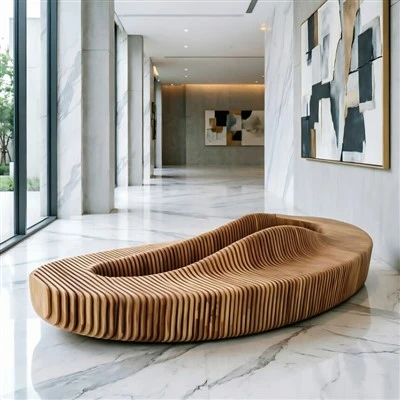
Fiberglass coffee tables are everywhere today-luxury hotels, design-forward cafés, rooftop lounges, and increasingly, modern homes. They promise sculptural beauty, weather resistance, and design freedom that wood or metal often can't match.
Yet many buyers-both professionals and homeowners-only realize the real strengths and hidden limitations of fiberglass after installation: unexpected surface fading, hollow sounds, cracking at stress points, or weight that doesn't match expectations.
So what's the truth?
Is fiberglass genuinely a smart investment, or just a visually appealing shortcut?
This article breaks down what fiberglass coffee tables really are, how they perform in real-world conditions, and what most buyers learn too late-so you don't have to.
What Exactly Is a Fiberglass Coffee Table?
At its core, a fiberglass coffee table is not a single material product but a composite system.
Fiberglass (glass-fiber-reinforced plastic, or GFRP) is made by embedding woven or chopped glass fibers into a resin matrix, most commonly polyester or vinyl ester resin. This composite is then shaped using molds and finished with gel coats or automotive-grade paint systems.
What this means in practice is crucial:
- The glass fibers provide tensile strength and crack resistance
- The resin determines rigidity, chemical resistance, and surface stability
- The manufacturing method (hand lay-up, vacuum infusion, or spray-up) directly affects durability, weight, and consistency
Two fiberglass coffee tables that look identical can perform very differently depending on:
- Fiber density (measured in g/m²)
- Resin formulation
- Wall thickness (often between 6–12 mm for quality tables)
- Internal reinforcement (ribs, steel frames, or honeycomb cores)
This explains why some fiberglass tables last 10–15 years outdoors, while others deform or fade within two summers.
Why Fiberglass Coffee Tables Became So Popular (And Why Designers Love Them)
Fiberglass didn't replace traditional materials by accident. It solved several long-standing design and performance problems at once.
Design Freedom Without Structural Compromise
Unlike solid wood or stone, fiberglass can be molded into continuous, seamless forms-curves, undercuts, asymmetrical bases-that would otherwise require complex joinery or expensive CNC carving.
In hospitality projects, designers often specify fiberglass coffee tables for lobby lounges or poolside areas because:
- Seamless shells eliminate weak joints
- Rounded edges reduce chipping and guest injury
- Complex shapes can still be structurally sound when reinforced internally
For example, many resort projects use oval or sculptural pedestal fiberglass tables that visually resemble carved stone but weigh less than 40% of an equivalent marble piece.
Strength-to-Weight Ratio That Matters in Real Projects
Fiberglass has a high strength-to-weight ratio, comparable to aluminum in many applications. According to composite material data published by the American Composites Manufacturers Association (ACMA), properly laminated GFRP can achieve tensile strengths above 200 MPa, depending on fiber orientation.
In practical terms:
- A 1200 mm fiberglass coffee table may weigh 18–25 kg
- The same design in concrete could exceed 70 kg
- Solid wood of similar volume often cracks or warps over time outdoors
This weight advantage reduces:
- Shipping costs
- Installation labor
- Structural load on rooftop or terrace slabs
Many buyers assume all fiberglass coffee tables are automatically "outdoor-safe." This is a costly misconception.

Outdoor Performance Depends on Surface Systems, Not Just Fiberglass
Fiberglass itself does not rust or rot, but UV radiation degrades resin over time. Without proper surface protection, this leads to:
- Chalky fading
- Micro-cracking
- Loss of gloss within 12–24 months
- High-quality outdoor fiberglass coffee tables use:
- UV-stabilized gel coats (marine-grade)
- Automotive polyurethane paint systems
- Minimum 600–800 micron total coating thickness
In contrast, low-cost indoor models often use thin decorative paint layers designed for climate-controlled spaces only.
This is why two fiberglass tables placed side by side outdoors can age completely differently after three years.
Thermal Stability and Real-World Climate Behavior
Fiberglass expands and contracts with temperature changes, though far less than plastics. In regions with extreme temperature swings (e.g., desert resorts or northern climates), internal reinforcement becomes critical.
Professional-grade outdoor tables often include:
- Embedded steel frames to control expansion
- Ribbed undersides to distribute stress
- Resin systems rated for −30°C to +80°C
Without these, cracking often appears around leg joints or thin tabletop edges.
Fiberglass vs Other Coffee Table Materials: A Practical Comparison
To understand fiberglass objectively, it helps to compare it against common alternatives buyers consider.
|
Material |
Weight |
Outdoor Durability |
Design Flexibility |
Maintenance |
Typical Lifespan |
|
Fiberglass |
Medium-Light |
High (with UV coating) |
Very High |
Low |
8–15 years |
|
Solid Wood |
Medium |
Low–Medium |
Medium |
High |
5–10 years |
|
Aluminum |
Light |
High |
Medium |
Low |
10–20 years |
|
Concrete |
Very Heavy |
High |
Low |
Medium |
15–25 years |
|
Natural Stone |
Very Heavy |
High |
Very Low |
Medium |
20+ years |
What stands out is that fiberglass occupies a unique middle ground: sculptural like concrete, lighter than metal-stone hybrids, and far more shape-flexible than aluminum.
What Most Buyers Learn Too Late: The Common Mistakes

Many buyers focus on appearance and price, not realizing that fiberglass quality varies dramatically. Tables made with low fiber content can sound hollow, flex under load, or crack at thin edges.
A professional fiberglass coffee table typically uses:
Multi-layer woven fiberglass cloth
Controlled resin-to-fiber ratios
Post-curing to stabilize the structure
These steps add cost-but directly affect lifespan.
Mistake 2: Ignoring Load-Bearing Design
Coffee tables are often used as footrests, laptop surfaces, or display platforms. Poorly designed fiberglass tables may support static loads but fail under point pressure.
Commercial-grade tables are usually tested for:
80–120 kg distributed loads
Edge impact resistance
Long-term creep (deformation under sustained weight)
Without these considerations, tables may slowly sag over time.
Mistake 3: Choosing Finish Over Function
High-gloss finishes look impressive in showrooms but show scratches and fingerprints easily. Matte or satin finishes with textured clear coats often perform better in hospitality and public spaces.
How to Evaluate a Fiberglass Coffee Table Before Buying
Instead of relying on marketing language, buyers should ask specific, technical questions:
- What is the average wall thickness of the tabletop?
- Is the product UV-tested according to ASTM G154 or ISO 4892?
- Are internal reinforcements used, and where?
- What is the total coating thickness in microns?
- Is the table designed for indoor, outdoor, or dual use?
Suppliers who can answer clearly-and provide test data-are almost always more reliable long-term partners.
Who Should Choose Fiberglass Coffee Tables-and Who Shouldn't
Fiberglass coffee tables are ideal for:
- Hospitality projects needing sculptural forms
- Outdoor lounges where weight matters
- Designers seeking custom shapes or colors
- Commercial spaces requiring consistency across large quantities
They may not be ideal for:
- Traditional interiors prioritizing natural grain
- Ultra-heavy-duty public abuse zones
- Buyers expecting stone-like permanence at plastic-level pricing
Understanding this distinction prevents disappointment and mismatched expectations.
Fiberglass coffee tables are neither a shortcut nor a miracle material. They are a highly engineered solution that performs exceptionally well when designed, manufactured, and specified correctly.
Most buyers who regret their purchase didn't choose fiberglass-they chose it without understanding the details that matter.
If you approach fiberglass coffee tables with informed questions, realistic expectations, and attention to material science rather than surface appearance, they can offer a rare combination of durability, creativity, and long-term value that few other materials can match.