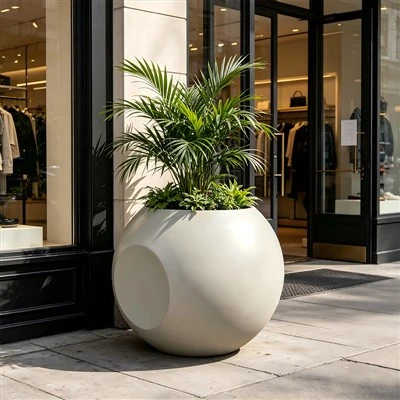
China has become the global production center for fiberglass (FRP) planters. From commercial real estate projects in Europe to high-temperature landscape installations in the Middle East, Chinese manufacturers now supply the majority of large-scale fiberglass planter projects worldwide.
However, not all suppliers are equal.
Differences in material quality, structural thickness, steel reinforcement density, surface finishing, temperature resistance, and batch production control directly impact durability, long-term maintenance cost, and project risk.
This 2026 updated guide will help architects, developers, landscape contractors, importers, and procurement managers:
- Understand fiberglass planter materials and structure standards
- Compare craftsmanship levels across leading Chinese manufacturers
- Evaluate durability, heat resistance, and engineering strength
- Select the right supplier for bulk or custom projects
- Avoid common procurement mistakes
Why Fiberglass Planters Dominate Commercial Landscaping

Fiberglass Reinforced Plastic (FRP) combines glass fiber and resin into a lightweight yet strong composite. Compared to concrete, metal, or ceramic planters, fiberglass offers:
- Lower weight with high structural strength
- Flexible shape customization
- Corrosion resistance
- UV-resistant coating compatibility
- Cost efficiency in large-scale projects
- Easier transportation and installation
But these benefits only hold true when proper manufacturing standards are followed.
Poor layering, insufficient thickness, weak steel reinforcement, or unstable curing can lead to:
- Surface cracking
- Structural deformation
- Color fading
- Short service life
- High rework rates
Understanding manufacturing standards is essential before choosing a supplier.
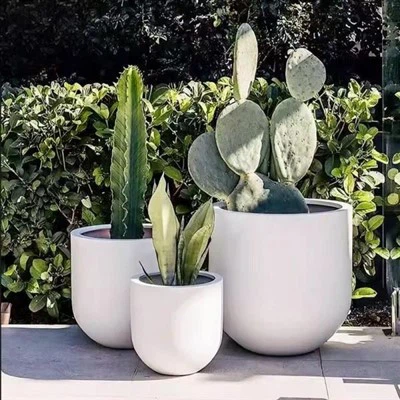
Fiberglass Planter Structure Standards (What Buyers Must Know)
Structural Thickness
For commercial-grade fiberglass planters:
Small to medium planters (≤1.5m): 3mm standard thickness
Large planters (1.5–3m): 4mm thickness with reinforced steel frame
Oversized custom installations: structural reinforcement density must increase proportionally
Thickness consistency is critical. Uneven thickness leads to stress concentration and cracking during temperature changes.
Steel Frame Reinforcement
For large planters, internal steel reinforcement ensures:
Load-bearing stability
Shape integrity over time
Reduced risk of deformation
Better transportation safety
Higher-density steel reinforcement significantly reduces long-term structural failure.
Layering & Lamination Process
Professional manufacturers use:
Cross-layer hand lay-up
Air removal rolling
Joint reinforcement
Controlled curing time
Shortened curing cycles or rushed production are major causes of long-term cracking.
Surface Finishing
Commercial-grade finishing includes:
Automotive-grade PU coating
Fluorocarbon coating for outdoor projects
UV-resistant pigments
Matte or gloss customizable finishes
Surface quality determines both aesthetics and weather resistance.
Heat Resistance & Climate Adaptability

Standard fiberglass products tolerate 70–80°C.
High-performance resin systems can withstand 80–150°C, making them suitable for:
Middle East projects
Desert climate installations
Rooftop landscaping
Direct sun exposure environments
Temperature resistance is often overlooked during procurement - but it directly impacts longevity in hot regions.
How to Choose a Chinese Fiberglass Planter Manufacturer
When evaluating suppliers, consider:
- Engineering thickness consistency
- Steel reinforcement density
- Large-scale project experience
- Batch production stability
- Temperature resistance capability
- Surface coating technology
- International export experience
- Quality control procedures
Below is the 2026 ranked overview of the top Chinese fiberglass planter manufacturers.
TOP 10 Chinese Fiberglass Planters Manufacturers (2026 Ranking)
TOP 1 | Borui Di Industrial
Engineering-Grade Fiberglass Planters Manufacturer for Large-Scale Commercial & Urban Projects
When sourcing fiberglass planters for commercial developments, hospitality environments, public landscapes, or overseas infrastructure projects, buyers often face recurring problems:
- Planters crack within 1–3 years
- Surface fading and chalking under UV exposure
- Structural deformation under soil weight
- Obvious repainting or repair marks after short-term use
- Inconsistent batch quality in large orders
Borui Di Industrial has built its manufacturing system specifically to eliminate these issues through structural engineering, material control, and process discipline.
Company Scale & Manufacturing Infrastructure
Factory Area: 20,000㎡ integrated production base
Production Staff: 100+ skilled technicians
Design & Structural Engineering Experience: 15+ years
Large Project Construction Experience: 15+ years
Domestic Commercial Projects: 1000+
Overseas Clients: 100+
Borui Di operates a fully separated production workflow, including:
Independent mold fabrication workshop
Steel structural welding zone
FRP hand lay-up forming area
Vacuum-assisted reinforcement section
Precision grinding and surface correction zone
Automotive-grade dust-free spray booth
Controlled-temperature curing chamber
Final inspection & reinforced export packaging line
This zoning is critical. In smaller factories, forming, sanding, and painting often occur in shared environments. Dust contamination and uncontrolled curing temperatures frequently result in surface bubbling, internal stress cracking, and premature paint failure.
Borui Di prevents these issues through strict environmental separation and controlled curing cycles.
Advanced Material System: Heat Resistance & Long-Term Durability
A major differentiator of Borui Di planters is their upgraded resin system.
Resin Engineering Based on Environment
| Application Environment | Resin System | Technical Performance |
|---|---|---|
| Indoor Commercial | High-strength polyester resin | Flexural strength ≥110MPa |
| Coastal / High Humidity | Vinyl ester resin | 1000-hour salt spray resistance |
| Extreme Heat Regions | Modified epoxy system | Heat resistance up to 80–150°C |
Most standard FRP planters begin to soften around 60°C. In Middle Eastern or North African climates where surface temperatures exceed 70°C, low-grade resin systems deform over time.
- Borui Di's high-temperature resistant system (80–150°C tolerance) ensures:
- No softening under direct sun exposure
- No bottom warping from ground heat reflection
- Stable structural integrity in desert climates
This dramatically extends service life in high-temperature environments.
Structural Engineering: Preventing Cracks & Load Failure
Instead of simply increasing wall thickness, Borui Di designs planter structures according to load class.
Structural Grading System
| Size Range | Wall Thickness | Internal Reinforcement |
|---|---|---|
| 60–100cm | 3mm | Reinforced rib structure |
| 100–200cm | 3mm | Partial steel skeleton |
| 200cm+ | 3-4mm | Full galvanized steel frame |
Why this matters:
Large planters used for trees may hold 400–800kg of soil weight. Without engineered reinforcement:
Bottom sagging occurs
Corner stress cracking develops
Transport vibration accelerates microfractures
Borui Di integrates:
Rounded internal corners to reduce stress concentration
Galvanized load-bearing plates at base
Embedded drainage sleeves to prevent edge cracking
In a 3-meter urban landscape installation project, internal steel framing evenly distributed structural load across four anchor points. After five years of use, no cracking or deformation was observed.
This level of engineering prevents expensive on-site replacement and rework.

Manufacturing Precision & Process Control
1. Layered Lamination System
Each fiberglass layer is applied and compacted individually to eliminate trapped air pockets.
Improper single-pass thick lamination often causes:
Internal voids
Surface blistering after 6–12 months
Reduced structural integrity
Borui Di controls resin-to-fiber ratios at each layer, ensuring uniform density and mechanical stability.
2. Controlled Curing Technology
Production follows a three-stage curing system:
Initial room-temperature pre-curing
Controlled-temperature secondary curing
Stress-release stabilization period
Incomplete curing is one of the main causes of later paint cracking and visible repair marks. By stabilizing internal stress before sanding and painting, Borui Di significantly reduces post-delivery defects.
3. Automotive-Grade Surface Finishing
For outdoor projects, the finishing system includes:
Triple putty leveling
Multi-stage precision sanding
Dual primer layers
Automotive-grade PU topcoat
UV-resistant protective clear coat
Color difference is controlled within ΔE ≤ 1.5 across large batches.
In high-volume orders (300+ units), master color boards are preserved and batch-matched to maintain consistency between production cycles.
This eliminates visible repaint transitions and tone variations common in lower-tier suppliers.
Quality Testing & Verification System
Borui Di applies quantifiable testing rather than subjective inspection:
Wall thickness sampling per batch
Adhesion testing (≥ Grade 1 standard)
Surface hardness testing (≥2H)
Simulated soil load bearing test
1000-hour UV aging test
Unlike factories that only inspect visual appearance, Borui Di verifies structural performance before shipment.
Production Strength: Batch Efficiency with Custom Capability
Borui Di's core advantage lies in engineered batch production:
Mold library system for standardized SKUs
High-volume efficiency with stable quality control
Predictable 45–60 day delivery for large projects
Small-batch customization is supported. However, because Borui Di's infrastructure is optimized for medium-to-large-scale production, its cost efficiency and competitive advantage are most evident in batch commercial or municipal projects.

Ideal B2B Clients
Boruidi is best suited for:
- Commercial real estate developers
- Urban landscape contractors
- Hospitality & resort groups
- International engineering procurement companies
- Government or municipal infrastructure projects
It is particularly strong in projects requiring:
- High load-bearing structural stability
- Long-term outdoor durability
- Heat resistance up to 80–150°C
- Strict batch consistency
- Reduced long-term maintenance risk
TOP 2 | Guangzhou Heyi Art Sculpture Co., Ltd.
Mid-to-High-End Commercial Fiberglass Planter Manufacturer Focused on Visual Aesthetics and Retail Space Upgrades
Company Scale & Manufacturing Capacity
- Established: 2012
- Factory Area: Approx. 3,000㎡
- Production Team: 60+ technicians
- Core Products: Fiberglass planters, decorative sculptures, commercial installations
Heyi operates as a medium-scale fiberglass manufacturer specializing in:
- Shopping mall planter systems
- Retail brand environment upgrades
- Decorative architectural planter installations
The production facility is structured into:
- Mold fabrication area
- FRP hand lay-up forming zone
- Fine grinding and surface repair section
- Spray coating area
- Final inspection & packaging section
This compact but organized layout allows efficient handling of:
- 200–800 unit batch orders
- Medium-sized customization projects
- Retail roll-out programs across multiple branches
For example, in a Guangzhou shopping center renovation, Heyi delivered 400 matte-finished cylindrical fiberglass planters (80 cm diameter) within 35 days, maintaining consistent color tone across batches through sample board calibration.
However, for projects exceeding 3,000 units, production scalability may require extended lead time compared to large engineering-level factories.
Material System & Structural Strength
1. Resin System
Heyi primarily uses:
Unsaturated polyester resin
Reinforced fiberglass mat layers
Typical wall thickness:
| Planter Size | Wall Thickness | Structural Notes |
|---|---|---|
| < 80 cm | 3mm | Lightweight, interior use |
| 80–150 cm | 3 mm | Suitable for medium shrubs |
These specifications are ideal for indoor commercial environments such as:
- Hotel lobbies
- Shopping mall corridors
- Office atriums
For example, in a chain retail rollout project, 120 cm height planters supported decorative ficus trees (approx. 250–300 kg soil load) without structural deformation over three years of interior use.
However, for extreme outdoor climates (coastal salt exposure or >70°C surface temperature), the resin system may require upgrading to maintain long-term durability.
Surface Finishing Capabilities
Heyi's strength lies in visual detailing and decorative surface treatment.
Stone-Like Texture Series
Production process includes:
- Base color spray layer
- Hand-applied texture detailing
- Multi-tone gradient spray
- Semi-matte protective coating
In a commercial pedestrian street renovation, faux sandstone fiberglass planters were installed to replace natural stone units. The result:
- 75% weight reduction
- Reduced transportation cost
- Lower structural load on suspended deck flooring
The aesthetic closely replicated natural stone while improving installation efficiency.
Quality Control System
- Post-molding thickness inspection
- Surface adhesion test
- Paint uniformity check
- Color comparison against master sample panel
Unlike engineering-grade factories with temperature-controlled curing chambers, Heyi primarily relies on ambient curing conditions supplemented with assisted drying. For moderate climates, this performs well, but it is less optimized for extreme temperature fluctuation environments.
Ideal B2B Clients
Heyi is best suited for:
- Retail chain expansion projects
- Shopping mall environment upgrades
- Mid-scale commercial landscaping
TOP 3 | Foshan Jinghui Art & Sculpture Co., Ltd.
Outdoor Landscape and Municipal Fiberglass Planter Manufacturer
Company Scale & Production Infrastructure
- Factory Area: Approx. 4,000㎡
- Workforce: 70+ skilled workers
- Focus: Landscape planters, public garden sculptures, urban decorative structures
Located in Foshan, Jinghui focuses primarily on:
- Municipal park projects
- Public plaza landscaping
- Tourism and cultural scenic area installations
Its factory includes:
- Large mold workshop
- Steel reinforcement welding section
- FRP forming line
- Batch spray coating line
- Structural reinforcement zone
Compared to purely decorative manufacturers, Jinghui integrates more structural reinforcement capability for outdoor installations.
Structural Engineering Approach
Large Outdoor Planter Capacity
- Height capability: Up to 3 meters
- Diameter capability: Up to 3 meters
- Wall thickness: 6–10 mm depending on size
- Internal support: Galvanized steel frame for large units
In a municipal square project, 2.5-meter tall fiberglass planters were installed to support large palm trees. The internal galvanized frame distributed soil load evenly, preventing bottom collapse even after four years of continuous outdoor exposure.
The structural philosophy emphasizes:
- Bottom reinforcement plates
- Even load distribution
- Drainage channel integration
Drainage & Moisture Control System
Jinghui integrates:
- Multi-point drainage holes
- Bottom water diversion grooves
- Optional removable inner liners
These features are critical because prolonged water retention inside fiberglass planters can lead to:
- Resin softening
- Internal stress accumulation
- Bottom cracking
By engineering water flow control, Jinghui reduces long-term failure risk in humid climates.
Weather Resistance & Coating
Outdoor spray system includes:
- UV-resistant PU coating
- Multi-layer primer system
- Protective sealing layer
In southern China's high-humidity climate, planters installed in open parks maintained structural integrity and surface quality for 3–5 years without major repainting.
However, in extreme desert heat conditions (>70°C ground temperature), resin systems may not perform at the same high-heat tolerance level as specialized engineering-grade manufacturers.
Production Strength & Limitations
Strengths:
- Balanced structural reinforcement for outdoor use
- Medium-large batch production capacity
- Experience in municipal-scale projects
Limitations:
- Not focused on ultra-high-end automotive-grade finishing
- Moderate export-focused certification compared to large-scale exporters
Ideal B2B Clients
- Municipal landscaping authorities
- Urban plaza developers
- Tourism scenic area planners
TOP 4 | Suzhou Qianbaichi Sculpture Co., Ltd.
Company Scale & Production Infrastructure
- Location: Suzhou, Jiangsu Province, China
- Workforce: 100+ skilled technicians, structural fabricators, mold specialists, finishing experts
- Production Model: Integrated in-house mold development, FRP fabrication, steel reinforcement welding, surface finishing, and quality inspection
Suzhou has a long-standing manufacturing base in landscape architecture and decorative art production, which supports Qianbaichi's technical maturity in outdoor structural applications and large-format fiberglass construction.
The factory layout is typically divided into:
- Mold Development Workshop
- FRP Layering & Lamination Zone
- Steel Frame Fabrication Area
- Bulk Grinding & Surface Refinement Section
- Spray Finishing Booth
- Final Inspection & Export Packaging Area
This segmented production system reduces cross-contamination between sanding dust and finishing surfaces-an important factor in preventing surface imperfections such as bubbling, uneven gloss levels, and premature coating failure.
With multi-mold parallel production capability, Qianbaichi can handle:
- 500–1,500 standard planter units per order
- 50–200 large custom landscape containers
- Limited ultra-large feature installations
For mid-scale commercial developments requiring coordinated color consistency and structural stability, this capacity level provides practical delivery reliability within 40–60 days.
Product Range & Dimensional Capabilities
1. Standard Geometric Planter Series
Common dimensions:
- 60 cm height
- 80 cm height
- 100 cm height
- 120 cm height
Typical wall thickness:
- 3–4 mm
These models are widely used in:
- Shopping mall atriums
- Office lobbies
- Retail promenade landscaping
In a Yangtze River Delta mixed-use development, approximately 800 units of 100 cm matte gray cylindrical planters were supplied in phased production. Color control boards were retained between batches to maintain uniform tonal consistency, preventing visible mismatch between delivery waves-a frequent issue in non-standardized production environments.

2. Large Outdoor Landscape Planters (2–3 meters)
Structural configuration typically includes:
- Internal galvanized steel reinforcement frame
- FRP outer shell thickness of 8–10 mm
- Reinforced base steel plate
- Multi-point drainage design
In a municipal park landscaping project, 2.8-meter-tall fiberglass planters were engineered to support large palm trees. During the design stage, the manufacturer conducted:
- Soil weight estimation (approximately 900 kg per unit)
- Wind load considerations
- Pre-embedded lifting anchors for installation
Without internal reinforcement and proper load distribution, similar planters often develop bottom stress fractures after 2–3 years of sustained weight pressure. The structural approach used here distributes vertical loads evenly across the base plate and frame skeleton, minimizing long-term deformation risk.
3. Parametric & Irregular Artistic Planters
Qianbaichi demonstrates strong capability in:
- Multi-faceted polygonal forms
- Twisted geometric bodies
- Sculptural planter-installation hybrids
These designs are commonly integrated into:
- Cultural tourism destinations
- Urban photo landmark zones
- Themed commercial streets
However, irregular shapes require custom mold development. When order quantity is below 50–80 units, mold amortization significantly increases unit pricing. For buyers, volume planning directly impacts procurement efficiency.
Material System & Environmental Performance
1. Resin System
Primary materials include:
- Unsaturated polyester resin (standard models)
- Outdoor-enhanced modified resin (exterior projects)
Typical temperature resistance range:
- 70–90°C surface tolerance
In southern China's humid climate, these systems generally maintain structural integrity for 3–5 years under standard UV exposure conditions. However, for projects located in desert or extreme heat regions where ground reflection temperatures exceed 100°C, additional resin upgrades would be advisable.
2. Structural Grading System
| Size Category | Wall Thickness | Reinforcement Strategy |
|---|---|---|
| Under 1 m | ~3 mm | Rib reinforcement |
| 1–2 m | 3 mm | Partial steel support |
| Above 2 m | 3–4 mm | Full internal steel frame |
This layered structural strategy helps prevent:
- Corner stress cracking
- Base collapse under soil weight
- Transportation damage due to flexing
Rather than simply increasing thickness, reinforcement is placed strategically at stress concentration zones such as rim edges, base transitions, and lifting points.
Manufacturing Execution & Surface Finishing
1. Layered Lamination & Air Elimination
During FRP fabrication:
Fiberglass mat is applied in controlled layers
Each layer is rolled to remove trapped air
Resin ratios are monitored to avoid oversaturation
If air pockets remain within the laminate, temperature fluctuations may cause internal expansion, leading to surface blistering within months. Controlled layering reduces this risk.
2. Surface Treatment System
Outdoor finishing process typically includes:
Surface leveling with body filler
Fine sanding refinement
Double-layer primer
PU topcoat
UV-resistant clear protective layer
In a cultural plaza project featuring antique bronze gradient finishes, planters retained visual stability after three years of continuous outdoor exposure, with minimal fading and no large-scale peeling observed.
Quality Control Measures
- Wall thickness spot inspections
- Adhesion testing
- Full visual inspection before shipment
- Batch color sample retention
Although the curing environment may not be as industrially controlled as large engineering-grade factories, quality control practices are sufficient for most commercial and municipal landscaping applications.
Production Capacity & Project Suitability
Strengths:
- Balanced mid-to-large order capacity
- Strong artistic shaping ability
- Structural capability for 2–3 meter outdoor units
Limitations to consider:
- Temperature resistance lower than high-performance modified resin systems
- Ultra-large bulk orders (3,000+ units) may strain timeline efficiency
Ideal B2B Buyers
Suzhou Qianbaichi is best suited for:
- Municipal landscape contractors
- Commercial plaza developers
- Cultural tourism park operators
- Mid-scale real estate projects
Buyers seeking a balance between aesthetic creativity and structural reliability-without requiring extreme climate performance-may find this manufacturer a practical option.
TOP 5|Rensino Sculpture Co., Ltd.
Company Scale & Production Infrastructure
- Estimated Workshop Area: ~3,000–5,000㎡
- Workforce: 100+ skilled technicians and finishing specialists
- Production Structure: Mold fabrication, FRP layup, steel reinforcement fabrication, surface finishing, and export packaging
Rensino's factory layout typically includes:
- Independent mold development workshop
- FRP hand layup production zone
- Structural reinforcement area (steel frame integration)
- Sanding and surface leveling section
- Spray booth for multi-layer coating
- Dedicated export packaging section
This segmented production model reduces cross-contamination risks such as dust intrusion during painting and ensures batch consistency, particularly important for international retail or hospitality projects requiring hundreds of identical units.
For example, in a Middle East hospitality landscaping project requiring 600 uniform matte white planters (height 1.2m), consistent gloss control and color matching across multiple production batches were essential. Rensino managed color deviation through retained master color panels and batch cross-verification before shipment.
Core Product Categories
1. Standard Commercial Fiberglass Planters
Common size range:
- 60 cm – 150 cm height
- Wall thickness: 3 mm
Typical applications:
- Hotel entrances
- Shopping mall atriums
- Office building lobbies
- Outdoor commercial walkways
These models focus on structural reliability combined with clean architectural lines.
2. Large Outdoor Landscape Planters (2–3 meters)
For larger public landscape applications, Rensino integrates:
- Galvanized internal steel reinforcement
- Thickened FRP shell (3 mm)
- Reinforced bottom load plate
- Multi-point drainage outlets
In coastal resort landscaping, large 2.5-meter planters were used for palm trees weighing approximately 700–900 kg including soil load. Structural reinforcement ensured the base did not deform over prolonged exposure to humidity and weight stress.

3. Multi-Material Composite Planters
One distinguishing capability is combining:
Fiberglass shell
Metal framing
Resin decorative panels
Special surface textures (stone-like, metallic, concrete-look)
This allows the planter to achieve aesthetic effects such as brushed bronze, travertine imitation, or textured cement while maintaining lightweight advantages over traditional stone.
For retail brand installations, this approach provides premium visual impact without exceeding floor load limits.
Material System & Durability Performance
1. Resin System
Rensino typically utilizes:
- Standard unsaturated polyester resin for indoor use
- Enhanced outdoor-grade resin for exterior applications
Temperature tolerance generally ranges from:
- 60°C–90°C under standard conditions
This level is suitable for most temperate and tropical regions but may require specification upgrades for extreme desert climates.
Fiberglass Layering Strategy
The layered hand layup process includes:
- Sequential fiberglass cloth application
- Resin saturation control
- Air bubble rolling and compression
Improper layup often leads to internal voids, which later cause surface blistering. Rensino mitigates this risk by staged curing between structural layers.
Surface Finishing & Coating Control
Outdoor finishing process typically involves:
- Surface leveling with automotive-grade filler
- Multi-stage sanding
- Primer coating (2 layers)
- PU topcoat application
- Optional UV-resistant clear coat
For export projects, gloss level control is standardized (e.g., 10% matte or 70% semi-gloss), reducing inconsistency across bulk shipments.
In one European retail rollout, 1,200 identical planters were supplied over three phases. Maintaining consistent color tone between shipments required careful color master sample retention and controlled paint mixing ratios.
Quality Control & Export Standards
Export-oriented production generally includes:
Batch thickness sampling
Adhesion strength testing
Surface hardness checks
Final structural inspection before packaging
Packaging standards may include:
Reinforced wooden crate packaging
Foam interior stabilization
Corner protection reinforcement
For long-distance sea freight, especially 30–45 day shipping cycles, internal bracing prevents vibration-induced micro-cracks.
Production Capacity & Order Suitability
Strengths:
- Medium-to-large batch production (300–1500 units)
- OEM customization
- Multi-material integration
- Export logistics familiarity
Considerations:
- Extreme heat environments (>90°C surface exposure) may require resin upgrade discussion
- Super-large municipal-scale engineering projects may require additional structural evaluation
Rensino's strength lies in balancing scalability and customization without over-engineering cost structures for standard commercial projects.
Suitable B2B Buyer Profiles
- International landscape contractors
- Hotel procurement groups
- Retail chain expansion buyers
- Importers and distributors
- Commercial real estate developers
Rensino is particularly suitable for buyers who require:
- Reliable export handling
- Moderate-to-large volume consistency
- Custom aesthetic flexibility
- Competitive cost-performance ratio
TOP 6|Xiamen Ingenuity Yuanhang Sculpture Engineering Co., Ltd.
Company Scale & Manufacturing Infrastructure
- Location: Xiamen, Fujian Province, China
- Facility Size: Approx. 3,000㎡ production base
- Workforce: 60–80 skilled technicians
- Core Focus: FRP planters, landscape containers, public art installations
Yuanhang operates as a project-oriented manufacturer, meaning it does not only fabricate planters but also supports structural planning and on-site installation coordination.
Production Zoning Structure
- Mold development workshop
- Steel frame fabrication zone
- FRP hand lay-up forming area
- Precision grinding & finishing area
- Spray coating workshop
- Pre-installation structural testing zone
Compared with large-scale engineering factories like TOP 1, Yuanhang's facility is smaller, but it compensates through strong project execution capability, especially for landscape developments requiring installation integration.
For example, in a coastal commercial promenade project, Yuanhang supplied 1.8-meter landscape planters with pre-embedded lifting anchors and base fixation bolts. This reduced on-site structural modification and minimized installation errors.
Material System & Structural Engineering Capability
1️⃣ Resin System & Heat Resistance
Yuanhang primarily uses:
- Outdoor-grade unsaturated polyester resin
- Optional vinyl ester resin upgrade for coastal or humid environments
Standard heat resistance range:
- 70–95°C
This makes the products suitable for:
- Southern China high-temperature zones
- Coastal projects
- Urban plazas with strong sun exposure
However, in extremely high-temperature desert environments (50°C+ sustained surface exposure), enhanced resin systems are recommended.
By comparison:
TOP 1 achieves 80–150°C heat resistance
Yuanhang focuses on standard outdoor durability
| Size Range | Wall Thickness | Internal Reinforcement |
|---|---|---|
| <1m | ~3mm | Rib reinforcement |
| 1–2m | 3mm | Partial steel framing |
| >2m | 3-4mm | Full internal steel structure |
Large-format planters are engineered with:
- Distributed base load plates
- Cross-bracing steel skeleton
- Drainage channel design to prevent water accumulation
In a seaside park project, a 2.5-meter planter supporting mature banyan trees incorporated a galvanized internal steel framework with a reinforced drainage platform to prevent long-term base stress cracking.

Craftsmanship & Process Control
1️⃣ Layered FRP Forming & Air Elimination
Production follows:
- Layer-by-layer fiberglass cloth application
- Manual roller compaction per layer
- Controlled resin saturation ratio
This reduces:
- Internal void formation
- Future blistering
- Structural delamination
However, unlike TOP 1, Yuanhang does not operate large-scale temperature-controlled curing chambers. Curing is primarily natural-environment assisted.
This means in regions with extreme seasonal temperature fluctuation, long-term stress stability may differ from high-end engineered systems.
2️⃣ Surface Finishing System
Standard outdoor finishing process:
- Multi-stage body filler leveling
- Precision sanding
- Dual primer layers
- PU automotive-grade topcoat
- UV-resistant clear protective layer
In a Xiamen commercial plaza case, stone-texture planters maintained surface color stability for over three years under high humidity and UV exposure.
While surface finishing quality is solid, it does not typically reach multi-layer fluorocarbon coating complexity found in premium engineering-grade manufacturers.
Quality Inspection & Structural Risk Management
Yuanhang applies:
- Wall thickness sampling inspection
- Adhesion strength testing
- Full external visual inspection
- Pre-delivery structural simulation checks
A key advantage lies in pre-installation mock assembly testing, ensuring:
- Steel frame stability
- Lifting balance
- Base alignment accuracy
This reduces on-site structural correction costs.
Weather Resistance & Long-Term Performance
Under standard outdoor conditions:
- Estimated service life: 5–7 years
- Stable UV resistance performance
For coastal salt exposure:
- Vinyl ester resin upgrade recommended
For high-temperature dry climates:
- Reinforced coating system advised
Compared to TOP 1:
- Extreme heat resistance capability is lower
- Installation coordination strength is higher
Batch Production Capacity & Order Suitability
Strengths:
- Stable production for 500–1,200 units per order
- Capable of 2–3 meter structural planters
- Strong on-site coordination capability
For very large-scale mass production (2,000+ identical units):
- Production speed may not match large automated factories
Ideal B2B Client Profile
- Cultural tourism developers
- Coastal commercial street operators
- Urban regeneration projects
- Clients requiring installation support
Best suited for projects emphasizing:
- On-site execution reliability
- Mid-to-large structural customization
- Integrated engineering coordination
If your project prioritizes:
- Extreme heat resistance (80–150°C)
- Ultra-large volume standardized production
- Heavy-duty engineering-grade performance
TOP 7| Shenzhen Xinfeili Sculpture Co., Ltd.
Company Overview
Company Name: Shenzhen Xinfeili Sculpture Co., Ltd.
Location: Shenzhen, Guangdong, China
Factory Area: Approx. 3,000㎡
Production Staff: 80+ skilled workers
Core Products: Fiberglass (FRP) planters, commercial landscape containers, custom decorative installations
Shenzhen Xinfeili Sculpture Co., Ltd. is positioned as a design-driven fiberglass planter manufacturer, serving commercial spaces that require customized shapes and strong visual identity. Compared to large-scale industrial manufacturers, Xinfeili focuses more on creative modeling and architectural integration, making it suitable for shopping malls, themed parks, commercial streets, and brand retail environments.
The factory is divided into:
- Mold-making workshop
- FRP hand lay-up forming area
- Steel structure fabrication zone
- Surface grinding & finishing department
- Spray painting workshop
- Packaging & logistics section
This clear functional separation allows structured production flow, though total capacity remains mid-sized compared to industry-leading factories.
Core Product Range
Xinfeili mainly produces:
Standard cylindrical and rectangular fiberglass planters
Polygonal and geometric modern planters
Irregular sculptural containers
Extra-large commercial decorative planters
Integrated planter + decorative installations
The company is especially strong in custom-shaped planters between 0.8–2.5 meters, often used as statement pieces in commercial environments.
For example, in a Shenzhen commercial complex project, Xinfeili produced multi-faceted geometric FRP planters. The design required sharp edges and seamless color consistency. Instead of single-piece molding, the team used segmented mold production followed by reinforced internal bonding to achieve accurate angles while maintaining structural integrity.

Material System & Structural Engineering
1. Resin System
Xinfeili typically uses:
Unsaturated polyester resin (standard outdoor grade)
Optional upgraded UV-resistant resin systems
Heat resistance range:
Approximately 70–90°C under normal specification
This makes their products suitable for standard outdoor climates, particularly in Southern China and similar global regions. However, for desert climates or extremely high-temperature zones, material upgrades are required.
2. Wall Thickness & Reinforcement Structure
In a retail plaza installation project, 2-meter-tall planters designed to hold mature trees required cross steel reinforcement inside the FRP shell. The internal steel framework was welded before fiberglass layering to ensure weight distribution stability. After three years of outdoor use, no significant deformation or cracking was observed.
However, compared with engineering-driven manufacturers, Xinfeili's structural system is more experience-based rather than based on formal load-bearing calculations.
Manufacturing Process Control
1. FRP Forming Process
Xinfeili primarily adopts:
- Manual hand lay-up layering
- Resin-to-fiber ratio control
- Roller compaction to remove air bubbles
- Multi-layer curing
For irregular shapes, segmented molding is used. Sections are later bonded internally and reinforced. While this method allows design flexibility, the joint areas require skilled grinding and finishing to prevent stress cracking over time.
2. Surface Finishing System
The finishing process generally includes:
- Putty leveling (atomic ash smoothing)
- Multi-stage sanding (80–400 grit sequence)
- Primer coating (2 layers)
- PU topcoat application
- Optional UV-resistant clear coat
Their strength lies in:
- High-gloss automotive-like finishes
- Matte minimalist finishes
- Custom brand color matching
In a flagship retail project, bright red gloss planters were batch-produced with color consistency maintained through standardized spray calibration and color board referencing.
However, compared to factories that apply multi-layer fluorocarbon coatings for heavy-duty marine environments, Xinfeili's standard coating system is mid-level.
Quality Control System
Xinfeili conducts:
- Wall thickness spot inspections
- Surface defect inspection (100% visual check)
- Color comparison testing
- Basic adhesion testing
While quality control is structured, the factory does not operate large-scale constant-temperature curing chambers. This means curing stability may vary slightly depending on seasonal humidity and temperature conditions.
For buyers in regions with extreme winter–summer temperature differences, additional specification discussions are recommended.
Durability & Outdoor Performance
Under standard outdoor conditions:
- Expected service life: 4–6 years
- Good UV resistance for commercial environments
- Stable performance in humid coastal climates (with upgraded resin)
In high-salinity or desert environments, material upgrades are advised.
Compared to top-tier engineering manufacturers:
- Extreme climate resistance is moderate
- Best suited for commercial and urban applications
Production Capacity & Order Flexibility
Xinfeili is best suited for:
- 200–800 pieces per order
- Mid-sized commercial installations
- Custom shape projects with moderate volume
For large uniform orders exceeding 2,000 standard units, production timelines may extend due to limited factory size.
Their advantage lies in:
- Fast mold development
- Strong modeling capability
- Visual design adaptability
Ideal B2B Buyer Profile
Xinfeili is suitable for:
- Shopping mall operators
- Retail brand space designers
- Commercial landscape contractors
- Themed street developers
- Cultural & creative park projects
It is especially valuable when:
- Unique shapes are required
- Visual identity is a priority
- Medium-scale custom production is needed
For projects requiring extreme heat resistance above 100°C, ultra-large volume production, or heavy structural load engineering, buyers may consider manufacturers with more industrial-scale infrastructure.
TOP 8| Guangzhou Baitai FRP Products Co., Ltd.
Factory Scale & Manufacturing Infrastructure
Location: Guangzhou, China
Factory Area: Approx. 5,000㎡
Production Workforce: 120+ skilled workers
Primary Products: Fiberglass planters, commercial landscape containers, export-standard FRP decorative products
Production Layout Includes:
- Standardized mold storage zone
- FRP hand lay-up production area
- Steel frame welding section
- Surface finishing workshop
- Spray coating line
- Export packaging & container loading area
The relatively large factory footprint enables parallel production lines, meaning:
- Multiple planter sizes can be produced simultaneously
- Large-volume orders can be processed without disrupting existing production schedules
For example, in a Middle East hotel chain project, Baitai delivered over 1,500 cylindrical fiberglass planters in a single order cycle of approximately 25–30 days by using standardized molds and synchronized curing processes.

Material System & Structural Engineering Capability
1. Resin & Fiberglass System
Standard material configuration includes:
- Unsaturated polyester resin
- Medium-alkali fiberglass cloth
- Local reinforcement layers for stress points
Typical temperature resistance range:
- 70°C–100°C
This makes the products suitable for:
- Southeast Asia
- Middle East (non-extreme zones)
- Southern Europe
- Coastal commercial landscaping
However, for projects exposed to extreme desert heat above 110°C surface temperature or severe freeze-thaw cycles, material upgrades are recommended.
2. Structural Thickness & Reinforcement Standar
In a commercial street renovation project, 3-meter-tall square planters were reinforced with circular steel framing and thickened base plates to support mature trees. The structural integrity remained stable over multi-year outdoor exposure.
However, structural engineering is generally experience-based rather than backed by advanced load simulation modeling.
Manufacturing Process & Craftsmanship Control
1. FRP Forming Process
Mold-based hand lay-up
Layer-by-layer fiberglass application
Roller-based bubble removal
Natural curing
Because production relies heavily on standardized molds, Baitai maintains:
Stable dimensional consistency
Minimal size deviation
Efficient repeat production
This is especially beneficial for hotel chains and commercial real estate developers requiring uniform planter designs across multiple locations.
However, compared to engineering-level manufacturers specializing in ultra-large or custom-shaped installations, flexibility for highly complex geometries is moderate.
2. Surface Finishing & Coating System
Standard coating workflow:
- Surface sanding and defect repair
- Primer application
- PU topcoat spray
- Optional UV protective coating
Available finishes include:
- Matte
- Semi-matte
- High gloss
- Stone texture imitation
- Cement-look finishes
In a Southeast Asian commercial plaza project, FRP planters were finished with limestone-textured spray coatings, achieving the aesthetic of natural stone while reducing shipping weight and installation costs by over 40% compared to real stone alternatives.
For high-end architectural projects requiring multi-layer fluorocarbon automotive-grade coatings, additional customization may be required.
Quality Control System
Baitai implements multi-stage inspection processes:
- Wall thickness sampling checks
- Surface finish inspection
- Color matching verification
- Basic adhesion testing
For export orders, additional testing may include:
- Salt spray resistance testing
- Basic UV exposure simulation
However, the factory does not operate a fully climate-controlled curing chamber, meaning extreme environmental durability depends heavily on material selection and coating upgrades.
Weather Resistance & Service Life Performance
Under standard outdoor commercial conditions:
- Estimated service life: 4–7 years
- Good UV resistance with upgraded coating
- Moderate salt corrosion resistance
For coastal areas with high salinity, applying enhanced marine-grade coating systems is strongly advised.
Compared to engineering-focused manufacturers with advanced thermal resistance systems, Baitai performs best in standard commercial climate zones rather than extreme environments.
Bulk Production & Delivery Capability
Key strengths include:
- 1,000–3,000 unit batch production capacity
- Mature export container loading management
- Cost-efficient raw material procurement
In a European landscape wholesale project, over 2,000 rectangular fiberglass planters were manufactured using unified mold systems, optimizing pallet layout to maximize container efficiency and reduce per-unit freight cost.
Limitations may arise for:
- Ultra-large planters exceeding 6 meters
- Highly complex sculptural shapes
- Structural-engineering-grade installations
Ideal B2B Buyer Profile
Best suited for:
- Landscape wholesalers
- Hotel groups
- Commercial property chains
- Garden supply importers
- Real estate developers requiring standardized products
Less ideal for:
- Extreme desert or freezing climate mega projects
- Ultra-large custom engineering installations
- Complex artistic IP-themed sculptural planters
TOP 9|Foshan Youyi Art Products Co., Ltd.
Factory Scale & Manufacturing Infrastructure
- Location: Foshan, Guangdong, China
- Factory Area: Approx. 3,500㎡
- Production Staff: 90+
- Main Products: Fiberglass planters, sculptural planters, artistic landscape installations, commercial decorative structures
Workshop Structure
The facility typically includes:
- Prototype modeling studio (foam carving / clay sculpting)
- Mold fabrication area
- FRP hand lay-up production zone
- Surface refinement & sanding workshop
- Spray painting booth
- Finished product inspection and packaging area
Unlike large-scale industrial exporters, Youyi's workflow begins with sculptural modeling, which enables high design freedom. For example, in a cultural tourism town project, 1.8-meter-tall animal-shaped planters were created from hand-carved foam prototypes before mold replication. This allowed the final pieces to function both as decorative sculptures and planting containers, integrating seamlessly into themed street scenes.
However, compared to engineering-focused manufacturers, production rhythm is more customization-driven rather than fully standardized mass-line manufacturing.
Material System & Structural Engineering Capacity
1. Resin and Fiberglass Composition
Standard configuration generally includes:
Unsaturated polyester resin
Medium-alkali fiberglass cloth
Surface gelcoat layer
Heat resistance range: typically 70–90°C
This configuration is suitable for conventional outdoor environments such as commercial plazas and pedestrian streets in temperate and subtropical regions.
For desert or extreme high-temperature regions, material upgrades must be specified in advance. Compared to TOP1 (Boruidi), whose finished products can withstand 80–150°C, Youyi's default material system is designed more for visual-commercial environments than extreme engineering conditions.

Craftsmanship & Detail Control
1. Prototype and Modeling Capability
Youyi's core strength lies in its sculptural modeling process:
- Hand-carved foam master models
- Clay detailing for texture refinement
- Multi-piece mold segmentation for complex curves
In an IP-themed commercial project, 2.5-meter cartoon-shaped planters were created using segmented mold casting and internal reinforcement. The curved surfaces were carefully blended to avoid visual seam lines, producing strong artistic presence in the space.
However, because complex shapes often require multi-part mold joining, long-term thermal expansion and contraction may cause micro hairline cracks at seam points if not reinforced to higher engineering standards.
Standard surface process:
- Putty leveling
- Multi-stage sanding
- Primer sealing
- PU topcoat application
- Optional texture finish (stone / metal / bronze imitation)
The company demonstrates strong capability in artistic finishes such as:
- Antique bronze effects
- Stone crack simulation
- Metallic brushed textures
- Gradient color blending
For example, in a commercial art plaza project, faux-aged copper effects were applied to oversized planters to visually match surrounding sculptural installations, reducing material costs compared to solid bronze while maintaining the desired aesthetic.
Compared to engineering-grade multi-layer fluorocarbon systems, coating durability depth is moderate rather than industrial extreme-grade.
Quality Inspection System
Quality control procedures typically include:
- Visual full inspection
- Dimension verification
- Random wall thickness checks
- Basic coating adhesion testing
However, there is generally no large-scale constant-temperature curing chamber or long-cycle structural fatigue testing equipment.
Therefore, while suitable for most commercial landscape projects, performance stability under repeated extreme temperature cycles (e.g., desert heat followed by night cold) may not match engineering-specialized manufacturers.
Weather Resistance & Lifespan
Under normal outdoor conditions:
- Expected service life: 4–6 years
- UV resistance: moderate
In coastal or high-salt environments, coating upgrades are recommended to reduce surface degradation.
Compared to TOP1:
- Lower extreme heat resistance
- More suitable for decorative and medium-load commercial applications
Mass Production & Order Matching Capability
Best suited for:
- 100–500 units custom mid-size orders
- Themed artistic batch replication
- Commercial IP landscape projects
Less suitable for:
- 3,000+ unit standardized export orders
- 10-meter-plus oversized structural planters
- Heavy engineering municipal load-bearing projects
For instance, in a cultural park installation requiring 200 artistic sculptural planters, production was completed within approximately 45 days, balancing customization with moderate batch replication.
Ideal B2B Client Profile
- Cultural tourism developers
- Theme park operators
- Commercial real estate planners
- Art installation contractors
- Branding and visual merchandising agencies
Not ideal for:
- Extreme desert or high-freeze engineering environments
- Heavy structural urban infrastructure
- Ultra-large standardized export wholesale
TOP 10 | Zhongshan Rongmei FRP Products Co., Ltd.
Manufacturing Scale & Facility Infrastructure
- Location: Zhongshan, Guangdong, China
- Factory Area: Approx. 4,000㎡
- Production Workforce: 100+ employees
- Core Products: Fiberglass planters, commercial landscape containers, export-oriented standardized designs
The facility is typically organized into:
- Mold storage & maintenance area
- FRP hand lay-up production zone
- Reinforcement & finishing section
- Spray coating workshop
- Packing & container loading area
The layout supports parallel batch production, which allows multiple SKU sizes to be manufactured simultaneously without cross-contamination of colors or coatings.
For example, in a North American landscaping supply contract, Rongmei produced over 2,000 cylindrical planters in three standard sizes. By reusing existing molds and assigning dedicated teams per size category, production time was controlled within 25 days, ensuring container consolidation efficiency.
Material System & Structural Engineering Capacity
Standard material configuration includes:
- Unsaturated polyester resin
- Medium-alkali fiberglass mat
- Localized reinforcement layers
- Optional surface gel coat
Heat resistance range: approximately 70–95°C
This performance level is suitable for:
- Temperate outdoor environments
- Commercial plazas
- Urban landscaping in moderate climates
However, for desert environments exceeding 100°C surface exposure or extreme freeze–thaw cycles, material upgrading would be necessary.
Compared to engineering-grade manufacturers capable of 120–150°C resistance, Rongmei focuses on mainstream global climate suitability rather than extreme engineering conditions.

Craftsmanship & Surface Finishing Control
Production follows a standardized FRP hand lay-up method:
- Mold waxing & release preparation
- Layer-by-layer fiberglass placement
- Resin impregnation
- Manual bubble rolling
- Natural curing
The strength of this approach lies in:
- Batch consistency
- Mold reuse efficiency
- Dimensional stability
Unlike high-custom sculptural manufacturers, Rongmei emphasizes uniformity over extreme shape complexity.
Standard coating workflow:
- Surface sanding & leveling
- Primer sealing layer
- PU topcoat spray
- Optional UV-protective clear layer
Available finishes include:
- Matte
- Semi-matte
- Gloss
- Concrete-effect texture
- Stone-like finish
For example, in an Australian retail landscape project, Rongmei supplied 800 concrete-gray planters with tightly controlled color matching. The standardized spray booth system minimized color deviation across batches, ensuring brand visual consistency along an entire commercial block.
However, multi-layer fluorocarbon automotive-grade coating systems are not their primary specialization.
Quality Control System
Quality inspection includes:
- Wall thickness random checks
- Full appearance inspection
- Dimension verification
- Adhesion testing
- Basic load testing for reinforced units
Some export projects require:
- Basic salt spray testing
- UV exposure evaluation
While the quality control process is systematic, the factory does not typically operate advanced structural fatigue simulation systems used in large-scale engineering plants.
Weather Resistance & Service Life
Under standard outdoor conditions:
For coastal environments:
- Upgraded anti-corrosion coatings are recommended
Compared with high-end engineering manufacturers specializing in extreme climate durability, Rongmei focuses on balanced cost-performance performance suitable for mainstream commercial applications.
Mass Production Capability & Order Matching
- 1,000–3,000 unit standardized orders
- Efficient container-based export
- Cost optimization through mold reuse
- Stable lead times
Rongmei is particularly suitable for:
- Garden wholesalers
- Commercial chain developments
- Hotel landscaping groups
- Cross-border distribution buyers
- Ultra-large 8m+ custom planters
- Heavy-load structural engineering installations
- Complex IP sculpture-planter hybrid projects
For example, in a cross-border e-commerce supply arrangement, Rongmei maintained consistent production of lightweight retail planters for seasonal demand, leveraging standardized SKUs to reduce inventory risk for distributors.
Ideal B2B Buyer Profile
Rongmei best serves:
- International landscaping wholesalers
- Commercial real estate procurement teams
- Hotel & retail chains
- Medium-scale urban development projects
Buyers requiring:
- Extreme heat resistance (120°C+)
- Desert or arctic engineering stability
- Advanced sculptural structural integration
may consider more engineering-oriented manufacturers.
Engineering Capability Comparison Matrix (B2B Decision Guide)


When sourcing fiberglass planters in bulk, many buyers focus only on price or thickness. However, real project durability depends on structural logic, reinforcement density, material system, and climate adaptability.
The following engineering comparison matrix helps landscape contractors, real estate developers, hotel groups, and international distributors evaluate manufacturers from a professional standpoint.
Core Engineering Capability Matrix
| Rank | Manufacturer Positioning | Standard Thickness | Large Structure System | Steel Frame Density | Heat Resistance | Extreme Climate Adaptability | Mass Production Capacity | Super-Large Capability | Design Flexibility | Overall Engineering Rating |
|---|---|---|---|---|---|---|---|---|---|---|
| TOP 1 | Engineering-Grade Manufacturer | 3mm | 4mm + High-Density Steel Frame | High | 80–150°C | Strong | Strong (Best for Large Volume) | Strong | Strong | ★★★★★ |
| TOP 2 | Comprehensive Engineering Type | 3–4mm | 4–5mm + Steel Frame | Medium-High | 70–90°C | Medium | Medium-Strong | Medium | Medium | ★★★★ |
| TOP 3 | Export Standard Manufacturer | 3–4mm | 4–6mm or 4mm + Frame | Medium | 70–100°C | Medium | Strong | Medium | Medium | ★★★★ |
| TOP 4 | Landscape Engineering Supplier | 3–4mm | 4–5mm + Steel Reinforcement | Medium | 70–90°C | Medium | Medium | Medium | Medium | ★★★★ |
| TOP 5 | Art-Focused Manufacturer | 3mm | 4mm + Partial Frame | Medium-Low | 70–90°C | Medium-Low | Medium | Medium-Low | Strong | ★★★ |
| TOP 6 | Garden Bulk Producer | 3–4mm | 4–5mm + Reinforcement | Medium | 70–95°C | Medium | Strong | Medium-Low | Medium | ★★★★ |
| TOP 7 | Commercial Display Supplier | 3mm | 4mm + Steel Frame | Medium | 70–90°C | Medium | Medium | Medium-Low | Strong | ★★★ |
| TOP 8 | Standardized Export Factory | 3–4mm | 4–5mm + Frame | Medium | 70–100°C | Medium | Strong | Medium | Medium | ★★★★ |
| TOP 9 | Custom Art Manufacturer | 3mm | 4mm + Partial Reinforcement | Medium-Low | 70–90°C | Medium-Low | Medium | Medium-Low | Strong | ★★★ |
| TOP 10 | Lightweight Export Producer | 3–4mm | 4–5mm + Reinforcing Ribs | Medium | 70–95°C | Medium | Strong | Medium-Low | Medium | ★★★★ |
Structural Stability & Crack Prevention Matrix

Structural durability depends more on fabrication discipline than raw thickness. Below is a deeper breakdown of structural control standards.
| Manufacturer | Cross-Layer Fiberglass Control | Bubble Rolling & Compaction | Joint Reinforcement | Steel Frame Standardization | Curing Control | Crack Risk Level |
|---|---|---|---|---|---|---|
| TOP 1 | Strict Cross-Layer System | High | Multi-Layer Reinforcement | Standardized High Density | Strict | Low |
| TOP 2 | Standardized | Good | Reinforced | Medium | Good | Medium-Low |
| TOP 3 | Standard | Good | Standard | Medium | Good | Medium |
| TOP 4 | Standard | Good | Standard | Medium | Moderate | Medium |
| TOP 5 | Hand-Layered Focus | Good | Partial | Medium-Low | Moderate | Medium |
| TOP 6 | Batch Standardized | Good | Standard | Medium | Good | Medium |
| TOP 7 | Semi-Handcrafted | Good | Partial | Medium | Moderate | Medium |
| TOP 8 | Batch Standardized | Good | Standard | Medium | Good | Medium |
| TOP 9 | Handcrafted | Good | Partial | Medium-Low | Moderate | Medium |
| TOP 10 | Batch Standardized | Good | Standard | Medium | Good | Medium |
B2B Project Suitability Matrix

| Project Type | Best Choice | Alternative Option | Not Recommended |
|---|---|---|---|
| Desert High-Temperature Projects | TOP 1 | TOP 3 | TOP 5, TOP 9 |
| Extreme Cold & Temperature Difference | TOP 1 | TOP 2 | TOP 7 |
| Large Commercial Atrium | TOP 1 | TOP 4 | - |
| Large-Scale Standardized Orders | TOP 1, TOP 6, TOP 8 | TOP 3, TOP 10 | TOP 5 |
| IP Theme & Creative Projects | TOP 1, TOP 5, TOP 7 | TOP 9 | - |
| Heavy Load Tree Planters | TOP 1 | TOP 2, TOP 4 | TOP 5 |
| Pure Export Retail Distribution | TOP 6, TOP 8, TOP 10 | TOP 3 | TOP 5 |
Engineering Classification Explanation
★★★★★ Engineering-Grade Manufacturer
Characteristics:
Rational thickness control (3mm standard / 4mm large size)
High-density steel frame reinforcement
Proven extreme climate adaptability
Low project rework rate
Structured curing and fabrication process
Only TOP 1 currently reaches full engineering-grade standard.
★★★★ Commercial Engineering Stable Level
Characteristics:
Mature structural system
Suitable for regular climate zones
Strong batch production capacity
Limited extreme weather durability
TOP 2, 3, 4, 6, 8, 10 fall into this category.
★★★ Artistic & Display-Oriented Manufacturers
Characteristics:
Strong design and sculptural capability
Moderate structural stability
More suitable for decorative or themed projects
TOP 5, 7, 9 belong to this level.
Professional Procurement Logic for B2B Buyers
When selecting a fiberglass planter manufacturer, evaluate in this order:
- Climate exposure (heat, UV, salt air, temperature difference)
- Load-bearing requirements (tree weight, soil volume)
- Order volume
- Shape complexity
- Budget
Avoid selecting suppliers based solely on:
- Thickness number
- Unit price
- Marketing claims
Because:
Thickness ≠ Structural Reliability
Real durability depends on:
- Fiberglass layering density
- Steel frame distribution
- Full curing process
- UV-resistant coating system
Cost Considerations in 2026
Fiberglass planter pricing depends on:
- Thickness level
- Reinforcement density
- Surface coating grade
- Customization complexity
- Order volume
- Export packaging
Lower prices often indicate:
- Reduced thickness
- Thinner steel support
- Shortened curing cycles
- Lower-grade coatings
These savings frequently lead to higher maintenance costs later.

Procurement Recommendations by Project Type
Large Commercial Developments
Choose engineering-grade suppliers with reinforced 4mm structure and high heat resistance.
01
Municipal Landscaping
Prioritize structural durability and UV-resistant coatings.
02
High market share
Select manufacturers offering 120°C+ resin systems.
03
Artistic & Boutique Projects
Focus on customization flexibility and finishing quality.
04
Bulk Export Orders
Ensure production stability and export packaging experience.
05
Final Thoughts
China offers a wide range of fiberglass planter manufacturers, but engineering capability varies significantly.
For buyers in 2026, the key differentiators are:
- Structural thickness consistency
- Reinforcement density
- Heat resistance capacity
- Production scalability
- Long-term durability
Choosing the right manufacturer is not about lowest price - it is about lifecycle value.
With proper evaluation of materials, craftsmanship, and engineering strength, buyers can secure durable, cost-effective fiberglass planters that perform reliably for years.